Table of Content
- What is Shipping Software?
- What is Route Optimization Software?
- The Critical Difference: Who Controls the Delivery?
- Where the Two Categories Overlap
- Five Questions to Determine Which Software You Need
- The Cost of Choosing Wrong
- When Businesses Need Both Solutions
- A Closer Look at Routific: A Popular Route Optimization Tool
- What to Consider When Evaluating Route Optimization Platforms
- Making the Right Choice for Your Business
If you run a business that moves products from point A to point B, you have probably come across two types of software: shipping software and route optimization software. They sound similar, and many business owners assume they do the same thing.
They do not.
Understanding the difference between these two tools can save you thousands of dollars annually and help you choose the right solution for your specific operations. This guide breaks down what each software does, where they overlap, and how to decide which one your business actually needs.
What is Shipping Software?
Shipping software handles everything that happens before a package leaves your warehouse. It connects your business to carriers like FedEx, UPS, USPS, and DHL, allowing you to compare rates, print labels, and manage tracking information from a single dashboard.
The core functions of shipping software include rate shopping across multiple carriers, generating shipping labels, tracking packages through carrier networks, managing returns and exchanges, and syncing order data with ecommerce platforms.
Popular shipping platforms like ShipStation, Shippo, and ShippingEasy focus on streamlining the handoff between your warehouse and third-party carriers. Once a package enters the carrier network, the software tracks its journey but has no control over how it gets delivered.
Shipping software works best for businesses that rely entirely on external carriers. If you sell products online and FedEx or UPS handles all your deliveries, shipping software is likely all you need.
What is Route Optimization Software?
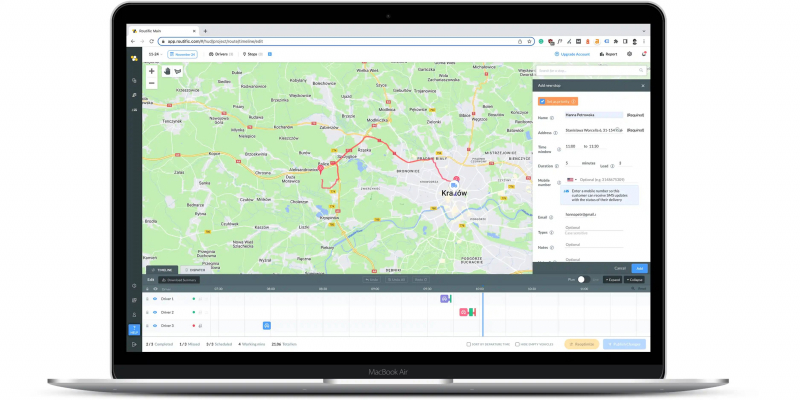
Route optimization software takes over where shipping software stops. It plans the actual delivery routes your drivers will take, calculating the fastest and most efficient paths to reach multiple stops.
This type of software considers factors like traffic patterns, delivery time windows, vehicle capacity, driver schedules, and road restrictions. Instead of simply handing packages to a carrier, route optimization software helps you manage your own delivery fleet.
The core functions include multi-stop route planning, real-time GPS tracking, proof of delivery collection, driver dispatch and communication, and delivery time predictions for customers.
Businesses with in-house delivery teams, local delivery services, field service operations, and courier companies typically need route optimization software. The goal is reducing miles driven, cutting fuel costs, and completing more deliveries per day.
Popular platforms in this category include Routific, Route4Me, OptimoRoute, and several newer AI-powered solutions. Each platform takes a slightly different approach to optimization, so businesses often compare Routific alternatives before committing to a long-term solution.
The Critical Difference: Who Controls the Delivery?
The simplest way to understand the difference comes down to one question: who actually delivers your packages?
If third-party carriers handle your deliveries, shipping software manages that relationship. You compare rates, print labels, and track packages through carrier systems.
If your own drivers make deliveries, route optimization software plans their routes. You control the entire delivery process from dispatch to doorstep.
Many businesses fall somewhere in the middle. A furniture company might use UPS for small accessories but send its own trucks for large items. An ecommerce brand might ship nationally through carriers but handle same-day local deliveries with an in-house team. A pharmacy chain might rely on FedEx for rural shipments while deploying local drivers for same-day prescriptions in metro areas.
Where the Two Categories Overlap
Some confusion exists because modern software platforms have started blending features. Several shipping software providers now offer basic route planning, while some route optimization tools include carrier integrations.
However, these crossover features rarely match the depth of dedicated solutions. Shipping software with route planning typically offers simplified sequencing rather than true optimization. Route optimization software with carrier connections usually provides basic label printing without comprehensive rate shopping.
The overlap creates a tempting illusion that one tool can do everything. In practice, businesses with complex operations often need both types of software working together. A meal kit company, for example, might use shipping software to manage ingredient sourcing from suppliers while relying on route optimization for final customer deliveries.
Five Questions to Determine Which Software You Need
Before investing in either solution, answer these questions honestly:
- Do you operate your own delivery vehicles? If yes, route optimization software should be your priority. Managing driver routes manually becomes inefficient beyond a handful of daily stops.
- Do you ship through multiple carriers? If you regularly compare rates between FedEx, UPS, and regional carriers, shipping software will save significant time and money.
- Do your deliveries require specific time windows? Route optimization software excels at scheduling deliveries within customer-requested timeframes. Shipping software cannot control when carriers attempt delivery.
- Do you need proof of delivery? If collecting signatures, photos, or delivery confirmations matters to your business, route optimization software provides these capabilities. Carrier tracking only confirms a package was delivered, not how or to whom.
- What is your delivery radius? Local and regional delivery operations benefit most from route optimization. National shipping through carriers makes shipping software more relevant.
The Cost of Choosing Wrong
Selecting the wrong software category wastes money in two ways.
Using only shipping software when you need route optimization means your drivers take inefficient routes. Without proper planning, a ten-stop delivery run might cover twice the necessary miles. Fuel costs increase. Drivers work longer hours. Customers wait longer for deliveries. One HVAC company discovered their technicians were driving 40% more miles than necessary simply because dispatchers assigned jobs in the order they came in rather than by geographic logic.
Using only route optimization software when you need shipping capabilities means overpaying for carrier services. Without rate comparison tools, you might consistently choose expensive shipping options when cheaper alternatives exist.
A regional bakery learned this lesson after purchasing expensive route optimization software to manage deliveries. The problem was that 80% of their orders shipped through UPS to customers outside their delivery zone. They needed shipping software first and added route optimization later when local demand grew.
When Businesses Need Both Solutions
Growing delivery operations often reach a point where both software types become necessary. This typically happens when a business ships nationally through carriers while also running local delivery routes.
Consider an online retailer based in Chicago. They ship orders nationwide using USPS and FedEx, requiring shipping software to manage labels and track packages. But for customers within 50 miles, they offer same-day delivery using their own drivers. That local operation needs route optimization software.
The two systems can work together. Orders come in through the ecommerce platform. Shipping software handles carrier shipments. Route optimization software plans local delivery routes. Some businesses integrate both tools so orders automatically flow to the appropriate system based on delivery address or delivery speed selected at checkout.
A Closer Look at Routific: A Popular Route Optimization Tool
When businesses start researching route optimization software, Routific frequently appears near the top of search results. Founded in 2012 and based in Vancouver, Routific has built a solid reputation as a user-friendly platform for small to mid-sized delivery operations.
Routific focuses on simplifying multi-stop route planning. Users can import delivery addresses via spreadsheet, and the software calculates optimized sequences within seconds. The platform offers a clean interface that requires minimal training, making it accessible for teams without technical expertise. Many users praise how quickly they can get started without extensive onboarding.
Key features include bulk address import, delivery time window support, driver mobile apps, customer notifications, and basic analytics. Routific also provides an API for businesses wanting to integrate route optimization into existing systems. The platform handles common delivery scenarios well and has earned positive reviews for reliability and ease of use.
The platform works particularly well for companies running straightforward delivery operations with predictable daily routes. Florists, bakeries, meal prep services, and small courier companies often choose Routific because of its simplicity and reasonable learning curve. For businesses new to route optimization, it provides a solid entry point into the category.
That said, every platform involves tradeoffs. Some growing businesses find they eventually need features Routific does not prioritize, such as real-time driver tracking in entry-level plans, multi-depot management, or advanced reporting. Pricing scales with vehicle count, which works well for small fleets but requires careful budgeting as teams expand. These considerations are not unique to Routific—most route optimization platforms require businesses to evaluate which features matter most for their specific operations.
What to Consider When Evaluating Route Optimization Platforms
Whether starting with Routific or exploring other options, several factors matter beyond basic feature lists.
Route optimization quality matters more than marketing claims suggest. The best platforms use AI-powered algorithms that account for real-world variables like traffic patterns, driver skill levels, and vehicle constraints. Testing optimization accuracy with your actual delivery data reveals differences that feature comparisons cannot capture. Request a trial period and run your real addresses through any platform before committing.
Driver adoption determines whether software succeeds in practice. A powerful platform that drivers refuse to use provides no value. Look for intuitive mobile apps with reliable navigation, easy proof of delivery capture, and minimal friction during the delivery process. Ask current users about their drivers' experience, not just dispatcher satisfaction.
Scalability affects long-term costs. Some platforms price per delivery, others per driver, and some offer flat monthly rates. Matching the pricing model to your delivery volume and growth trajectory prevents unpleasant surprises as operations expand.
Integration capabilities matter for businesses using other software systems. Route optimization tools that connect with ecommerce platforms, CRM systems, and shipping software create smoother workflows than standalone solutions requiring manual data transfer.
Customer support quality often separates adequate platforms from excellent ones. Delivery operations run into problems at inconvenient times. Responsive support teams that understand logistics challenges provide value beyond the software itself.
Making the Right Choice for Your Business
The shipping software versus route optimization software decision ultimately depends on your delivery model.
Choose shipping software if you rely on carriers like FedEx, UPS, and USPS for most deliveries. Look for platforms that integrate with your ecommerce system and offer comprehensive rate shopping.
Choose route optimization software if you manage your own drivers and delivery vehicles. Prioritize platforms with accurate optimization algorithms and mobile apps your drivers will actually use. Established options like Routific work well for simpler operations, while businesses with complex requirements should evaluate multiple platforms to find the right fit.
Choose both if your business combines carrier shipping with in-house delivery operations. Start with whichever category handles more of your current volume, then add the second solution as needed.
The right software does not just save time. It reduces costs, improves customer satisfaction, and positions your delivery operation to scale efficiently. Taking time to understand which category fits your business prevents expensive mistakes and sets the foundation for long-term growth.
Post Comment
Be the first to post comment!