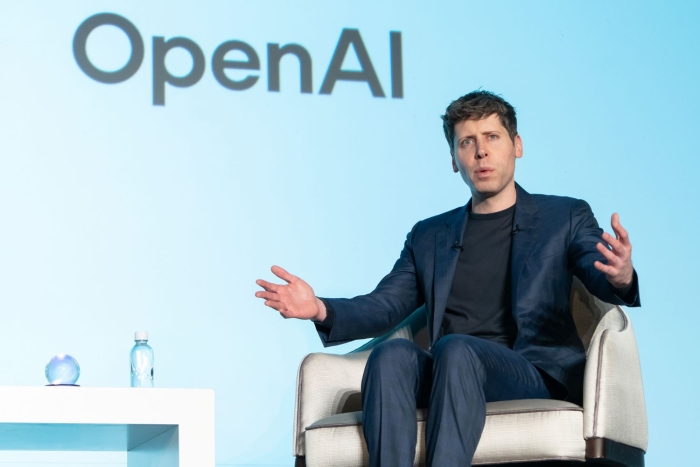
OpenAI is betting that the next major phase of artificial intelligence will not be defined by chatbots that simply answer questions, but by AI agents capable of completing entire projects on behalf of users.
The company is expanding its agent technology beyond software development through ChatGPT Work, a product designed to connect AI with the everyday digital tools used by professionals. The goal is to give accountants, investors, marketers, executives, researchers, and other knowledge workers access to AI systems that can carry out complex, multistep tasks with limited supervision.
But turning powerful AI agents into mainstream workplace tools presents a difficult challenge. Users must be willing to give these systems access to email, calendars, documents, workplace messaging services, browsers, and other sources of potentially sensitive information.
Generative AI tools became popular largely because users could type a question into a simple interface and receive an immediate response.
OpenAI now wants that interaction to evolve.
Instead of asking ChatGPT how to complete a task, the company wants users to be able to assign the task itself. An AI agent could gather information from several applications, analyze it, create documents or spreadsheets, and continue working through multiple steps until the project is complete.
ChatGPT Work is designed around this idea.
The product builds on technology developed for Codex, OpenAI's coding agent. Software developers have already become some of the earliest adopters of agentic AI because coding provides a relatively structured environment where models can write software, run tests, identify errors, and revise their work.
OpenAI now faces the more complicated task of adapting that experience for workers whose jobs do not revolve around software.
The company sees routine, information-heavy work as one of the clearest opportunities for AI agents.
An agent connected to workplace systems could prepare weekly performance reports, analyze spreadsheets, build dashboards, summarize conversations, gather information for investment memos, organize schedules, or create visualizations from company data.
In one example, an AI agent was able to extract calendar information from an email and add the relevant events to Google Calendar.
Similar technology could allow employees to search across information stored in services such as Slack, Salesforce, Notion, email, and cloud drives without manually opening each application.
This could be particularly valuable for workers dealing with large amounts of information spread across multiple systems.
Instead of spending time finding and copying data, an employee could potentially tell the agent what outcome they want and allow the software to coordinate the necessary steps.
The usefulness of these agents also creates one of their biggest obstacles.
An AI assistant cannot effectively manage a user's digital work unless it has access to the tools and information involved.
For some OpenAI employees testing the technology, that means allowing AI access to inboxes, Slack messages, phones, design platforms, documents, and other workplace applications.
Giving an AI agent that level of access may make it dramatically more useful, but it also raises questions about privacy, security, permissions, and accidental disclosure.
An agent preparing a document could potentially encounter confidential information inside a private message. A system connected to multiple workplace applications also has more opportunities to misunderstand instructions or expose information in the wrong context.
For many users, the decision may come down to whether the productivity benefits are valuable enough to justify granting an AI system extensive access to their digital lives.
OpenAI has already seen how difficult it can be to turn powerful agent technology into a mainstream product.
An OpenAI-backed study found that Codex usage was extremely high among the company's own employees in June 2026, with 98 percent using the system.
Adoption outside the company was significantly lower.
Only 17 percent of organizational subscribers were using the agentic coding tool, while fewer than 1 percent of individual subscribers were using it.
That difference demonstrates the scale of the opportunity, but also the challenge.
OpenAI's employees work inside one of the most AI-focused organizations in the world. Mainstream users may have less technical experience, fewer reasons to experiment with autonomous agents, and greater concerns about giving AI access to sensitive information.
One of OpenAI's priorities is making agent technology easier to understand.
Behind an AI agent is a software layer sometimes described as a harness. This system determines what information an AI model receives, which tools it can use, and how it interacts with the user.
Developers may be comfortable using command-line interfaces and technical configuration tools, but most workers are not.
OpenAI therefore wants ChatGPT Work to make complex agent capabilities accessible through the familiar conversational interface already used by ChatGPT customers.
Instead of learning a specialized application, users could describe what they want in ordinary language.
The challenge is balancing simplicity with control.
Too many settings can make the product confusing. Too few controls can make users uncertain about what the AI is doing or what information it can access.
Connecting AI agents to workplace applications is not always straightforward.
Different services have different permission systems, and users may need to decide whether an agent should receive read-only access or broader permission to make changes.
Some capabilities also remain inconsistent across devices and applications.
An agent might be able to create events in an existing calendar, for example, while lacking permission to create an entirely new calendar. Important configuration options may also be available on one platform but missing from another.
These limitations could become frustrating for people who expect an AI agent to behave like a universal digital assistant.
OpenAI's challenge is to hide much of this technical complexity without hiding important information about what the system can and cannot do.
OpenAI is also competing with Anthropic, whose Claude Code product became highly influential among software developers.
The two companies have taken somewhat different approaches to agent interaction.
Earlier versions of OpenAI's agent technology placed greater emphasis on letting the model independently complete tasks. Anthropic's approach often involved more frequent interaction with the user, presenting options and requesting feedback as work progressed.
That additional collaboration could reduce the possibility of an AI system moving too far in the wrong direction.
OpenAI has since added more opportunities for users to interact with its agents during tasks.
The competition demonstrates a larger question facing the industry: Should AI agents operate as independently as possible, or should they continuously involve humans in important decisions?
Software development offers AI companies something that many other professions do not: relatively clear indicators of whether the output works.
Code can be compiled, executed, and tested.
Tasks involving presentations, business strategies, sales pitches, financial analysis, or management decisions are more subjective.
A presentation can be technically correct but ineffective. A business strategy might appear convincing today but take months or years to produce measurable results.
This makes it harder for AI companies to train and evaluate agents for general workplace tasks.
OpenAI uses benchmarks covering dozens of occupations and hundreds of knowledge-work tasks, along with feedback from real users, to evaluate how its systems perform.
But creating an AI agent that can reliably handle the unpredictable nature of everyday professional work remains significantly more complicated than teaching one to complete programming tasks.
Agentic AI can also consume significantly more computing resources than ordinary chatbot interactions.
A simple question may require a relatively small amount of processing. An agent working on a complicated project might continue reasoning, searching through information, using tools, generating files, and revising its work over an extended period.
That can result in much higher token usage.
For AI companies, this could make agent products more valuable because customers may be willing to pay more for software that performs meaningful work.
At the same time, heavy usage could become expensive to operate.
OpenAI is working to improve the efficiency of its models, which could reduce the cost of performing the same tasks over time.
OpenAI is not alone in trying to automate professional workflows.
Specialized AI companies have already targeted individual industries and business functions. Harvey has focused heavily on legal work, while companies such as Clay have developed AI-powered tools for sales and customer acquisition.
These specialized platforms can often choose between different underlying AI models instead of depending on a single provider.
That creates strategic pressure for companies such as OpenAI.
If customers prefer specialized applications built on top of AI models, much of the value created by artificial intelligence could flow to the software companies controlling those workflows rather than the companies developing the models themselves.
Building its own widely used agent platform could help OpenAI maintain a direct relationship with professional users.
The long-term vision goes far beyond workplace automation.
AI companies increasingly imagine agents becoming a new interface between people and software.
Instead of opening individual applications and navigating menus, users could simply explain what they want accomplished.
The agent would determine which applications to access, which information it needs, and which steps are required.
That could dramatically change how people interact with computers.
But reaching that point requires AI systems to become more reliable, easier to configure, less expensive to operate, and more transparent about the actions they take.
Most importantly, users will need enough confidence to give these systems meaningful control over their digital environments.
OpenAI has already demonstrated that millions of people are willing to use AI for writing, research, brainstorming, coding, and answering questions.
Convincing those same users to let AI actively manage their work is a different challenge.
The more capable an agent becomes, the more information and permissions it may require.
That creates a fundamental trade-off between convenience and control.
If OpenAI can make agents reliable enough that ordinary workers feel comfortable delegating important tasks to them, ChatGPT Work could represent a significant shift in how artificial intelligence is used.
If users remain reluctant to connect their inboxes, calendars, workplace communications, and other sensitive systems, AI agents may remain primarily tools for developers and enthusiastic early adopters.
The technology is becoming capable of doing more than talking.
The bigger question now is whether people are ready to let it act.
Share your thoughts about this article.
Be the first to post a comment!