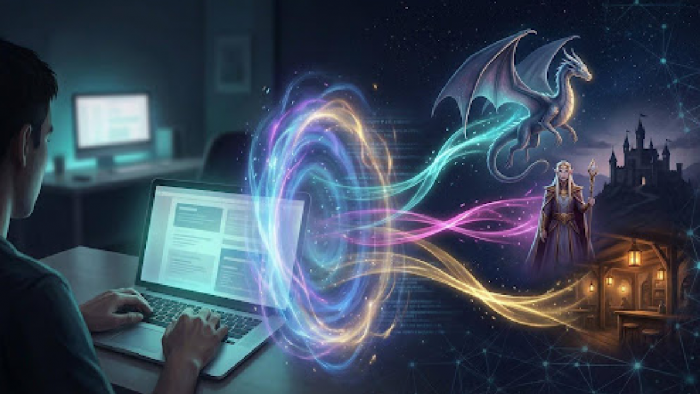
The digital economy is changing the rules of the game. Today, the ability to work with a computer, create content, or play video games can generate real income. Platforms have emerged where skills turn into money and hobbies turn into work. From freelancing to streaming, from design to programming, anyone who is willing to develop their skills can find a way to make money.
The gaming industry has become a particularly good example. This is especially evident in mobile hits like Clash of Clans, where player progression and strategic development can be directly monetized. Here, the player's skills are directly converted into income, creating a new class of digital workers. Games have ceased to be just entertainment – they have become a platform for business, creative self-realization, and global employment.
The history of digital skills monetization
The concept of earning money using digital skills was not new to the emergence of the modern freelance and streaming websites. At the beginning of the 2000s, individuals provided their services via the forums and websites: somebody wrote code for a site, somebody made custom graphics or small animations. To most people, it was a pastime that slowly turned out to be a form of income.
The game economy was also emerging simultaneously. Players in MMORPGs such as World of Warcraft would spend several hours upgrading their characters, gathering resources, and selling game-based items using real money. To some, it was entertainment, and to others, it was an actual job with financial outcomes.
Esports and streaming have enabled one to pursue playing as a career. The large prize money of the tournament, agreements with clubs, contributions of fans, all this became the initial instances of how digital skills can provide a stable income and new career opportunities.
Today, similar models have evolved in mobile strategy games such as Clash of Clans, where upgrading bases and troops requires significant time investment, creating demand for paid services.
Modern ways to monetize skills

Digital skills today have become incredibly varied in terms of their ability to bring about monetary rewards. Freelancers in the IT sector will design websites, apps, plug-ins, and services, and make money on global projects. In creative areas, graphics, animation, NFT art, and the creation of content for social platforms are in demand.
Gaming skills have also become a full-fledged source of income. Esports players and streamers earn money from tournaments, sponsorship contracts, and donations from the audience. In addition, there is a whole market for in-game services: players help others upgrade their characters, create unique content, and sell in-game items. For example, on popular platforms, you can find offers for the sale or upgrade of Clash of Clans accounts – services help to safely organize transactions and turn the gaming experience into real income.
This approach shows that the digital economy is not limited to traditional professions: any ability to create value in a virtual environment can bring money and become a full-fledged job.
The gaming sector as a laboratory of the digital economy
Games are a unique environment where skills become commodities. In games like Clash of Clans, this is особенно заметно: players invest time in building strong villages and then monetize that progress through account sales or boosting services. Platforms for account leveling, in-game services, and item trading demonstrate how gaming experiences can be converted into money.
Such examples as Skycoach, Roblox, and Second Life indicate that players can develop micro businesses by offering their services to others. These platforms act as intermediaries, ensuring the security of transactions and maintaining the reputation of performers.
The game economy vividly illustrates the general principles of digital work: time and skills turn into a commodity that is valued by the market. For many people, this is not just a way to have fun, but a full-fledged job with a real income.
Advantages and challenges of skill monetization
The main advantage of digital monetization is global access. Anyone with the Internet can offer their services and earn money from them. Such kind of employment is particularly appealing due to flexible working hours and the possibility to work anywhere in the world.
However, there are difficulties too. The income is fluctuating, the rivalry is intense, and the policies of the platform can occasionally be altered. The developers of a gaming service may block accounts, and regulate in-game markets, in case of gaming services. Individuals reduce risks through reputation-based systems, contracts, and quality digital labor services.
Nevertheless, the possibilities are huge. Players, designers, freelancers – they can all find a way to turn their skills into a source of income if they approach it systematically and responsibly.
Technologies that support digital monetization
Without technology, this market would not be possible. The use of streaming platforms such as Twitch and YouTube will enable you to stream the game process and generate income from the audience. The availability of online marketplaces such as Upwork and Fiverr allows access to the worldwide market of freelancers.
Gaming platforms – particularly in long-term progression games such as Clash of Clans – and services for pumping accounts make it possible to earn money in the gaming field. Mobile and cloud gaming increase the fanbase, and blockchain and Play-to-Earn can add real value to in-game assets.
Such technologies are commoditizing skills, and the digital economy is becoming available to millions of people globally.
The future of digital professions
With the growth of metaverses and virtual worlds, new professions will appear: virtual space managers, NFT designers, digital mentors, and in-game service consultants.
Games clearly show how skills can be turned into income. Platforms for selling services and accounts, streaming, and esports are forming new rules of work, where knowledge and skills become the main currency.
The digital economy opens up opportunities for everyone ready to develop their skills and look for non-standard ways to earn money. The games here act as a laboratory where new work and business models are tested.
Conclusion
Monetization of skills is not only about games, but also about any digital skills. Esports, streaming, freelancing, design, and in-game services show that every skill can be turned into a source of income.
The gaming industry is particularly visible: the player's skills become a commodity, and services like Skycoach help to earn safely and conveniently by pumping accounts and selling in-game items.
The digital economy opens up new horizons for professional development, turning skills into real money and games into a business field.
Post Comment
Be the first to post comment!