Microsoft is reportedly preparing its sales teams to take a more aggressive approach when competing against OpenAI, Anthropic, and Google in the enterprise artificial intelligence market.
During an internal strategy meeting for the company’s new fiscal year, executives allegedly encouraged sales representatives to highlight the weaknesses of rival AI products while presenting Microsoft’s technology as a more complete and cost-effective alternative.
The reported strategy signals a significant shift in Microsoft’s position within the AI industry. The company has invested heavily in external AI developers, particularly OpenAI, while also integrating third-party models into many of its products. Microsoft now appears increasingly determined to promote its own AI systems and reduce its dependence on outside providers.
A central part of Microsoft’s sales message is expected to focus on the company’s ability to provide an entire AI ecosystem.
Instead of offering only a chatbot or a standalone language model, Microsoft can combine cloud infrastructure, workplace software, security tools, data management services, and AI assistants within a single platform.
This gives the company an important advantage when speaking to large organizations. Enterprise customers are often more concerned with security, compliance, integration, and long-term support than with small differences in benchmark performance.
Microsoft can position Azure, Microsoft 365, Copilot, and its security products as interconnected parts of one business system. The company reportedly wants its sales teams to emphasize that competitors may offer strong individual models, but Microsoft can provide the broader infrastructure required to deploy those models across an organization.
Microsoft Copilot is expected to play a major role in the company’s efforts to challenge rival AI assistants.
According to reports about the internal meeting, Microsoft executives directly compared Copilot with Anthropic’s Claude. The company reportedly argued that Claude performed less effectively inside Microsoft’s workplace applications and did not offer the same level of security integration.
Such comparisons allow Microsoft to move the conversation away from general chatbot capabilities. Rather than asking which model produces the most impressive response in isolation, Microsoft can encourage customers to consider which assistant works best with Word, Excel, Outlook, Teams, and other tools employees already use.
This strategy could be especially effective among organizations that have spent years building their technology operations around Microsoft software. Switching to a competing AI platform could require additional integrations, new security reviews, employee training, and changes to existing workflows.
Microsoft’s reported sales strategy also highlights the changing nature of its relationship with OpenAI.
The partnership helped Microsoft become one of the earliest major technology companies to bring generative AI into widely used business products. Microsoft provided OpenAI with funding and computing resources, while gaining access to advanced models that could be incorporated into Azure and Copilot.
However, the two companies are no longer operating as closely as they once did. Changes to their agreement have given OpenAI more freedom to work with other cloud and technology providers. At the same time, Microsoft has continued developing its own models and exploring alternatives from multiple AI companies.
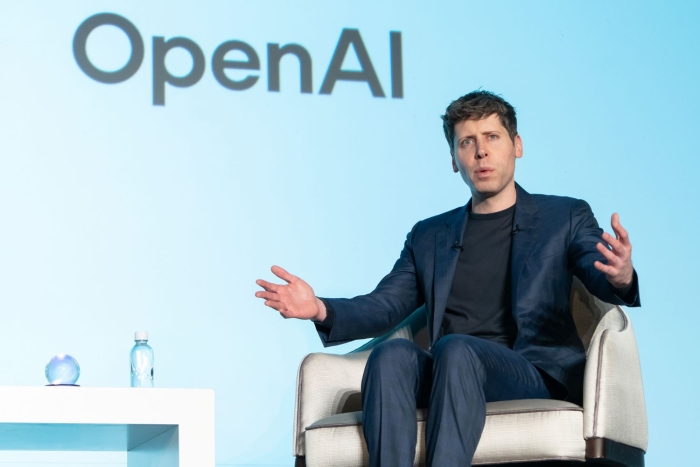
Microsoft and OpenAI can therefore remain important partners while also becoming more direct competitors. Both companies want to sell AI services to businesses, attract developers, and control the platforms through which customers access artificial intelligence.
The AI industry’s initial focus on model size and technical performance is gradually expanding to include practical concerns such as operating costs.
Running advanced AI models requires substantial computing power. For organizations deploying AI tools to thousands of employees, even small differences in usage costs can have a significant financial impact.
Microsoft reportedly plans to promote the efficiency and affordability of its internal models when compared with products from OpenAI, Anthropic, and Google. This could help the company appeal to customers that want useful AI features without paying for the most powerful model for every task.
A business may not need a highly advanced model to summarize routine documents, organize emails, generate meeting notes, or complete basic spreadsheet work. Microsoft could use smaller or more specialized models for these activities while reserving more expensive systems for complex requests.
This approach may also help Microsoft improve the profit margins of its AI products. Using external models can involve licensing and infrastructure expenses, while relying more heavily on internal technology gives Microsoft greater control over costs.
The growing competition between Microsoft and leading AI developers reflects a broader change in the market.
Artificial intelligence is no longer being sold only as an experimental technology. It is becoming a standard component of workplace software, cloud services, cybersecurity platforms, customer support systems, and business analytics tools.
As adoption increases, companies will compete not only over model quality but also over distribution, pricing, security, and compatibility with existing systems.
OpenAI and Anthropic have built strong brands around their AI models and assistants. Google has extensive cloud infrastructure, productivity software, and AI research capabilities. Microsoft, meanwhile, has deep relationships with enterprise customers and a large collection of products that can serve as distribution channels for Copilot.
The winner may not necessarily be the company with the most powerful individual model. The greater advantage could belong to the provider that makes AI easiest to purchase, deploy, manage, and secure across an entire organization.
Microsoft’s reported training strategy suggests that the company believes the enterprise AI market is entering a more confrontational stage.
Partnerships will remain important because no single company currently controls every part of the AI technology stack. At the same time, the boundaries between partners and competitors will continue to blur.
By encouraging its sales teams to make direct comparisons with OpenAI, Anthropic, and Google, Microsoft is presenting itself as more than a distributor of other companies’ models. It wants customers to view Microsoft as an independent AI provider with its own technology, infrastructure, and long-term strategy.
The shift could increase tensions between Microsoft and its AI partners, but it also reflects the enormous value of the enterprise market. As businesses invest more heavily in artificial intelligence, competition to become their primary AI platform is likely to become even more intense.
Share your thoughts about this article.
Be the first to post a comment!