Jeff Bezos is reportedly exploring the creation of a $100 billion investment fund aimed at acquiring and modernizing industrial companies using artificial intelligence. The report, citing The Wall Street Journal and covered by TechCrunch, points to a significant shift in how AI capital may be deployed over the next decade.
The effort is tied to Bezos’s startup, Project Prometheus, where he serves as co-founder and co-CEO alongside Vik Bajaj. Unlike typical AI ventures that focus on building software tools or platforms, Prometheus is reportedly pursuing a more capital-intensive strategy: acquiring existing industrial firms and upgrading them using AI-driven systems.
Moving AI Beyond Software
For the past decade, most AI investment has been concentrated in software, including language models, automation tools, and analytics platforms. The Prometheus approach reflects a different thesis. Instead of selling AI into businesses, it seeks to own the businesses themselves and embed AI directly into their operations.
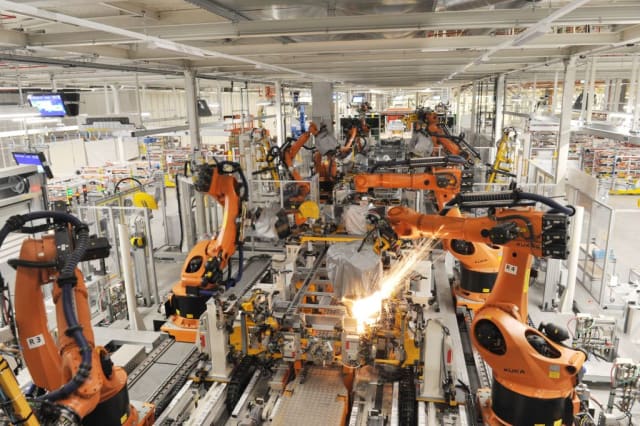
The sectors being targeted, including aerospace, semiconductor manufacturing, and defense, are not traditionally fast adopters of new technologies. They rely on complex supply chains, legacy systems, and long production cycles. However, they also offer significant upside when efficiency improvements are applied. Even small gains in yield, production speed, or resource optimization can translate into substantial financial returns.
The Scale of the Bet
Project Prometheus previously raised around $6.2 billion in initial funding. A $100 billion fund would represent a major escalation, placing it among the largest AI-related investment efforts to date. It would also position the company in direct competition with private equity and sovereign-backed funds that focus on industrial assets.
The scale matters because transforming industrial operations is not a software problem alone. It requires capital for acquisitions, infrastructure upgrades, workforce integration, and long-term operational changes. By combining capital and AI under one strategy, Prometheus appears to be aiming for deeper control over how transformation happens.
Why Industrial AI Matters Now
The timing of this reported move aligns with broader shifts in the AI landscape. As software-based AI tools become more widespread and competitive, attention is turning toward sectors where AI adoption is still relatively low but the potential impact is high.
Industrial environments present one of the largest untapped opportunities. AI can be used for predictive maintenance, reducing downtime in expensive machinery. It can optimize production lines, improve quality control, and enhance design processes through simulation. In sectors like semiconductor manufacturing, even marginal improvements in yield can have billion-dollar implications.
This is why investors are increasingly looking beyond consumer-facing AI products and into physical systems. The next phase of AI growth may be defined not by apps and interfaces, but by how effectively it integrates into real-world production environments.
Strategic Implications
If the reported plan materializes, it could reshape how AI is commercialized. Instead of licensing technology to existing companies, firms like Project Prometheus would control both the technology and the assets it operates on. This vertically integrated model allows for tighter implementation, faster iteration, and potentially stronger financial outcomes.
It also introduces new competitive dynamics. Traditional industrial companies may face pressure not just from peers, but from AI-backed ownership models that can move faster and operate more efficiently. At the same time, technology firms may begin to look more like industrial operators, blurring the line between software and manufacturing.
What Remains Unclear
The report indicates that fundraising efforts are ongoing, and there has been no formal confirmation from Bezos or Amazon. TechCrunch noted that it reached out for comment but did not receive a response.
Key details about the structure of the fund, potential investors, and acquisition targets remain unknown. Given the size of the proposed fund, it would likely involve a mix of institutional capital, private investors, and possibly sovereign wealth participation.
The Bigger Picture
Even at the rumor stage, the idea of a $100 billion AI-driven industrial fund reflects a broader transition in the technology landscape. AI is no longer confined to digital experiences or productivity tools. It is increasingly being positioned as a core layer in physical industries that define global supply chains and economic output.
If Bezos’s reported plan moves forward, it could mark a turning point where AI becomes not just a tool for businesses, but a driver of ownership and transformation at an industrial scale.
Post Comment
Be the first to post comment!