The landscape of portable gaming underwent a seismic shift at CES 2026 as Intel officially declared war on the handheld market, unveiling a dedicated silicon roadmap and a comprehensive platform designed to end years of AMD dominance. During a high-stakes keynote in Las Vegas, Daniel Rogers, Intel’s Vice President and General Manager of PC Products, confirmed that the company is not merely adapting existing laptop chips for smaller form factors but is instead engineering a bespoke hardware-software ecosystem. Central to this strategy is the "Panther Lake" architecture, represented by the newly debuted Intel Core Ultra Series 3 processors. This move marks the first time the tech giant has committed to a specialized variant of its flagship die specifically tailored for the unique thermal and power constraints of handheld devices, a project currently circulating under the "Core G3" branding.
At the heart of this hardware revolution is Intel’s proprietary 18A manufacturing process, a 2nm-class node that represents the pinnacle of American semiconductor fabrication. By utilizing this advanced node, Intel has managed to pack unprecedented transistor density into a compact footprint, allowing for a radical redesign of the integrated graphics tile. The star of the show is the Arc B390 integrated GPU, which features 12 Xe-cores and nearly 100 built-in AI accelerators. Intel’s internal benchmarks paint a staggering picture of performance, claiming the new silicon is up to 77% faster than the previous Lunar Lake generation and, perhaps more significantly, outperforms AMD’s Ryzen AI 9 HX 370 by a margin of 73% in average gaming tests. These gains allow the platform to run demanding triple-A titles like Battlefield 6 at frame rates previously reserved for high-end desktop rigs, while also enabling up to 27 hours of battery life in optimized workloads.
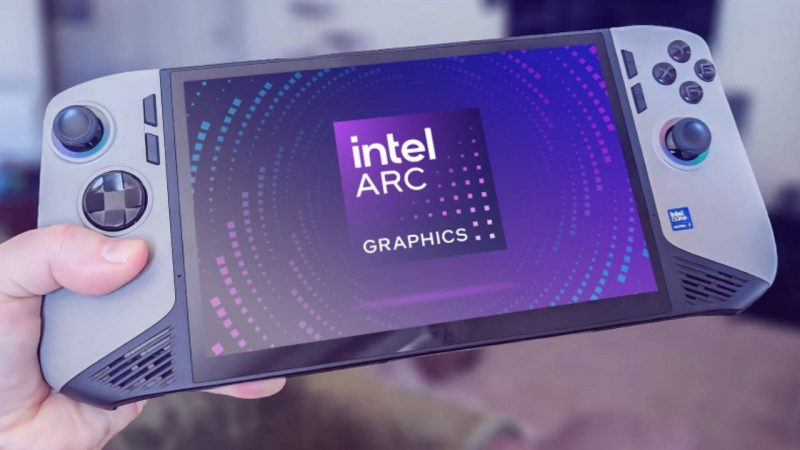
The technological leap is further bolstered by Intel’s sophisticated software stack, featuring the debut of XeSS 3. This updated AI upscaling technology introduces four-times multi-frame generation, a feat that theoretically doubles the frame-pacing capabilities of competing solutions. Beyond the raw numbers, Intel is addressing the long-standing criticism of its mobile graphics drivers with a "day-zero" support initiative, having already engaged over 300 developers to ensure hardware compatibility at launch. This commitment to stability and performance has already attracted a formidable list of hardware partners, including industry stalwarts such as MSI, Acer, and GPD, as well as manufacturing giants like Foxconn and Pegatron. In a surprising twist that sent ripples through the gaming community, Intel also hinted at exploring operating systems beyond Windows, suggesting that the Panther Lake platform could eventually find its way into devices running Linux-based environments or even specialized versions of SteamOS.
As pre-orders for the first wave of Panther Lake-equipped machines begin this month, the message from Santa Clara is clear: the era of making compromises for portable play is over. By decoupling the GPU tile and optimizing the "Core G3" variants with a specific focus on power efficiency and graphics throughput, Intel is positioning itself as the primary architect of the next generation of gaming. While AMD and Nvidia have long held the spotlight in this niche, Intel’s massive investment in its 18A foundries and its newfound focus on the handheld "ecosystem" signals a permanent change in the competitive balance of power. With the first consumer handhelds based on this dedicated silicon expected to arrive later this year, the industry is bracing for a new gold standard in what a mobile gaming machine can truly achieve.
Post Comment
Be the first to post comment!