The food delivery industry started as a basic convenience service but it has developed into an essential service for people living in cities. The growing food delivery market has drawn many businesspeople and developers who seek to reach the anticipated $1.6 trillion revenue potential by 2029. The local market operates in a highly competitive environment because businesses in the region compete to keep customers while providing quick service and superior satisfaction. Building a platform that dominates your area requires more than just technology. The process needs strategic planning and market understanding and flawless operational execution.
If you’re exploring food delivery app development, this guide will walk you through each step. This article will teach you to build a food delivery app that succeeds in competitive local markets through complete knowledge of planning and core features and marketing and scaling strategies.
Understanding the Local Food Delivery Market
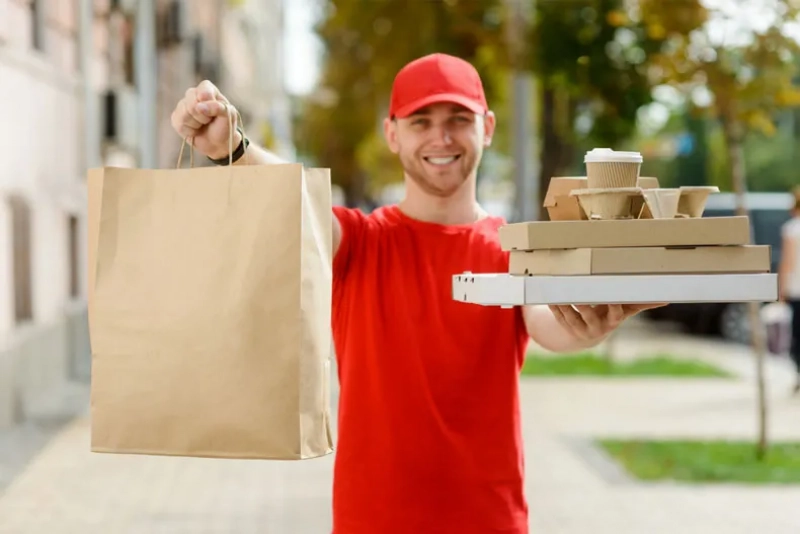
The initial requirement for delivery app development involves understanding the characteristics of your local market. Every urban area presents its own distinct patterns of customer conduct together with its own dining environment and delivery and pickup operations. Urban areas with dense populations prioritize quick delivery services and varied food selection but smaller communities choose affordable prices and consistent delivery times.
Research is your foundation. Study existing apps operating in your target market to identify their positive aspects and negative points and their delivery speed and payment costs and customer feedback. Identify gaps in the customer experience. Restaurants present two main challenges because customers face difficulties locating them and need to monitor their orders through real-time tracking and make payments using multiple methods.
Knowing what your competitors miss helps you design a custom food delivery app that delivers real value.
Step 1: Define Your Business Model
A food delivery application requires a well-defined business strategy to reach market success. There are three main types:
Order-only platforms
Serve as platforms which enable users to place orders at restaurants yet restaurants maintain full control over delivery operations.
Order and delivery platforms
The app handles both ordering and delivery operations by using a system of drivers.
Full-service platforms
Unite all necessary components through their integration of cloud kitchen meal preparation and order management and delivery services.
The order and delivery model proves most suitable for typical local startup operations. The model provides companies with control over their brand image and service standards at affordable startup costs.
Your revenue sources could be delivery fees and restaurant commissions and subscription plans for customers and in-app advertising. Your app requires a revenue model definition prior to starting any investment in advanced development work.
Step 2: Focus on Core Features
A food delivery platform which delivers high performance requires designers to create a system that unites user-friendly design elements with functional capabilities at their best. When planning food delivery mobile app development, include essential features for each user type:
For Customers
- Fast access through social media registration and phone number login
- Restaurant search filters and ratings
- Secure payment options: credit cards, digital wallets, and cash on delivery
- Real-time order tracking for delivery updates
- Push notifications for offers and delivery status
For Restaurants
- Order management dashboard for monitoring requests
- Menu customization with images, pricing, and availability
- Performance analytics for sales and feedback tracking
For Delivery Drivers
- GPS technology for route optimization
- Order acceptance and status updates
- Payment tracking for completed deliveries
Your app will have an intuitive interface when you conduct usability testing at the beginning of development. Users need a completely smooth experience that starts when they sign up and ends when their delivery is confirmed.
Step 3: Choose the Right Technology Stack
The tools developers choose for app development determine how well an application operates. The front-end development process needs React Native or Flutter because these frameworks let developers create applications that run on both iOS and Android platforms. Node.js and Python operate as back-end solutions because they provide scalable and adaptable functionality.
Your platform will keep order and customer data management through MongoDB and PostgreSQL databases.
Cloud integration functions as an essential requirement for the system. Your infrastructure will automatically scale up with customer base growth through the use of AWS or Google Cloud services. The systems described in this paper will support reliable operation of your food delivery application during periods of high user traffic.
Step 4: Build a Smooth User Experience
The most effective applications achieve success through the combination of their operational features with their visual design elements. Businesses maintain customer retention through two essential factors which are visual appeal and convenience. Users tend to abandon applications immediately after experiencing their first negative interaction which makes it essential for applications to have straightforward navigation and fast loading times.
Your interface needs to present a clean appearance through high-quality images while showing restaurants in an easily understandable manner. Reduce the number of clicks it takes to place an order. The system needs to show immediate order confirmations by using animated effects which will generate an active and dependable user interface.
During food delivery app development, it’s also smart to test different design prototypes with small user groups. Gather feedback and adjust before scaling up.
Step 5: Prioritize Security and Payment Systems
When customers provide their payment card details or use online wallet services they require assurance about their safety. The system requires SSL encryption, two-factor authentication, and Stripe or PayPal payment gateways for secure transactions.
Don’t overlook privacy policies and compliance with local data protection regulations. Organizations need to establish open data handling systems for operating under GDPR in Europe and CCPA in the United States. Security measures create trust between parties by minimizing the chances of future legal disputes which would result in expensive consequences.
Step 6: Build a Reliable Delivery Network
Food delivery requires human involvement instead of depending on technological systems. A dependable driver network partnership serves as the essential element which enables consistency. The company needs to establish an organized onboarding system which requires background checks and vehicle verification and training for customer service protocols.
The company should use technology to find the most efficient delivery routes which will help decrease delivery times. The system requires GPS tracking in real time to work with traffic prediction algorithms. The fast delivery of small improvements results in higher customer satisfaction which drives customers to place additional orders.
Step 7: Test, Launch, and Iterate
You should perform a beta test in a single neighborhood or district before your public launch. The process will reveal system problems and operational issues and usability problems. The company should offer early users discount prices when they provide their feedback to the system.
The system requires monitoring of three main performance indicators: order completion rates, delivery speed, and customer service quality. Adjust your processes and update features based on this data. Continuous iteration is what turns an average app into a dominant local brand.
Step 8: Marketing and Growth Strategies
Your app’s success depends on how well you market it. Start by creating a recognizable brand identity — logo, colors, and consistent messaging. The company needs to form partnerships with local restaurants to organize promotional activities which will attract fresh users to the platform.
Social media platforms together with local influencers need to work together to generate broad public interest. Offering limited-time free delivery or loyalty points can encourage downloads and repeat orders. Don’t underestimate SEO and ASO (App Store Optimization). Your application needs to be the first result that appears when users search for “best food delivery app near me.”
Use customer feedback as a marketing tool. Positive reviews help build trust between customers and businesses which leads to natural expansion of the business.
Step 9: Scale Smartly
Your custom food delivery app needs to be designed for growth after it achieves success in your local market. The company will generate additional revenue through its expansion into new delivery zones and its combination of grocery and pharmacy delivery services.
The growth of the company must never compromise its quality standards. Your core values should stay the same because they include fast delivery and reliability and customer satisfaction. Your business growth will become sustainable through the use of a consistent data-based methodology.
Step 10: Future Trends in Food Delivery
The next generation of food delivery mobile applications will develop through the integration of AI technology with automated systems and environmentally conscious design principles. Artificial intelligence systems optimize delivery routes and predict peak delivery demand times. Machine learning uses user purchase data to generate personalized recommendation suggestions.
The company attracts environmentally aware customers through its sustainable packaging solutions and electric scooter fleet and carbon offsetting programs. Organizations which implement these trends first will achieve market leadership in their competitive industry.
Final Thoughts
A food delivery platform needs substantial work to become the market leader in its particular region. The process needs strategic planning and advanced technology systems and complete knowledge of customer requirements. But with the right approach to how to create a food delivery app, you can develop a product that not only competes but leads in your area.
Invest in solid bases which include research work and user experience development and dependable logistics systems. Focus on trust, speed, and innovation. The future of food delivery will require professionals who unite technical expertise with local market understanding because the industry continues to grow.
Post Comment
Be the first to post comment!