A live gaming table doesn’t look especially complicated from a player’s side. You see a dealer, some cards or a roulette wheel, and a video feed that shows what’s happening.
But the studio behind it is a different story. There are cameras, data systems, streaming hardware and people working behind the scenes. All of it needs to stay in sync, especially when tables are running day and night.
The Studio Is More Than a Gaming Table
These studios are built specifically for live gaming and broadcasting. A typical setup includes several gaming tables, high-definition cameras, professional lighting and sound equipment. Cameras are placed at different angles so there can be an overhead view of the table, a closer shot of the dealer and another view for cards.
And the studio itself is controlled. Access is limited to authorised staff, and games are recorded and monitored, so that footage can be used if there’s a disagreement about what happened during a game and if anything needs to be checked.
Getting the Game onto Your Screen
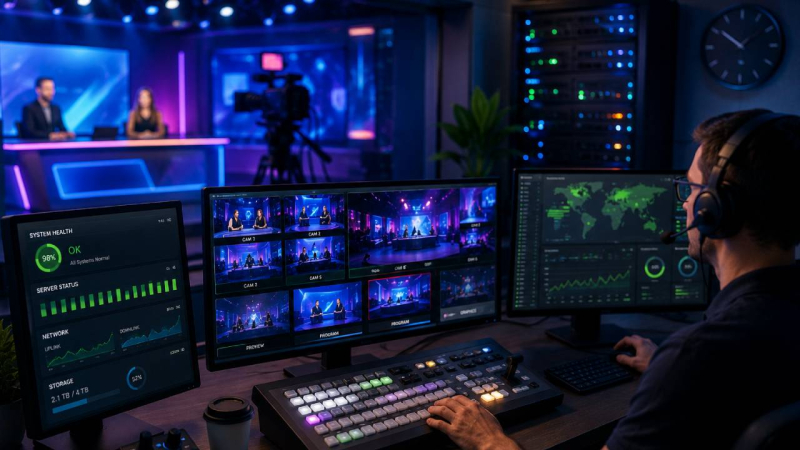
The stream has to travel from the studio to players in real time, and that creates its own technical challenges.
Low-latency streaming is used to keep the delay as short as possible. Adaptive streaming can adjust video quality depending on the player's internet connection, to help to reduce buffering. A Game Control Unit, or GCU, connected to the table helps encode and send the video feed. The studios need reliable internet infrastructure and backup systems because a broadcast interruption could affect multiple tables.
The stream needs to stay stable, the game data needs to match what’s happening at the table, and the different systems have to keep working together. But for those playing live dealer games online, all of this happens in the background. You just join a table and see the game happening in front of you.
How Results Become Digital Data
The online platform needs more than video. It also needs accurate information about the result of each round. That’s where optical character recognition comes in. OCR identifies the value and suit of a card when it’s dealt. Sensors also detect roulette outcomes and send that information to the game interface. The result then appears on the player's screen and their balance can be updated automatically.
But everything the OCR sees is happening physically. The technology isn’t choosing which card appears or where the roulette ball lands.
Monitoring and Fair Play
There are plenty of checks running behind the scenes. Surveillance systems keep an eye on gaming areas, while sessions and table activity are usually recorded. Licensed operators also have to meet requirements around fairness, security and player protection. Equipment is inspected, software is tested and procedures are in place for technical problems or mistakes.
That combination of monitoring, trained staff and technology is what keeps a live studio trustworthy.
The People Behind the Tech
Keeping a studio running isn’t just about having good equipment.
Trained dealers work shifts, with different staff taking over throughout the day and night. That gives dealers time away from the table while allowing games to continue.
Technical staff and supervisors have their own role. They monitor the systems, deal with equipment problems and know how to handle situations when something unexpected happens.
What Keeps a Live Studio Running
The dealer handles the physical game. Cameras capture it. OCR and sensors turn every result into digital information. Streaming equipment sends it out. Technical teams and supervisors keep watch over the whole setup.
That’s how a studio can keep live tables running throughout the day without the technology becoming noticeable to the player. You just see the game.
Post Comment
Share your thoughts about this article.
Be the first to post a comment!