TikTok is the last frontier for trend discovery and consumer insights in 2026, but gathering its content is becoming an increasingly difficult uphill struggle. If you've spent any time on Reddit's technical forums recently, you've probably noticed the growing dissatisfaction, never-ending CAPTCHAs, instant IP bans, and scripts that fail the moment they launch.
We are aware of how difficult it is to develop a dependable TikTok scraper that doesn't get throttled in a matter of minutes. This post looks at three tried-and-true methods for quickly acquiring data, which include specialized Python scripts, large-scale scraping APIs, and simple no-code tools.
Overcoming Anti-Scraping Challenges
You must effectively navigate a maze of complex barriers to scrape TikTok. The platform utilizes dynamic JavaScript and sophisticated device fingerprinting to prevent non-human traffic. IP bans or prolonged CAPTCHA that stop your progress are promptly triggered by its security measures. To get over these obstacles, try using headless browsers and a clever rotation method. This way, you can evade detection and keep a constant flow of data by dispersing queries over a large network.
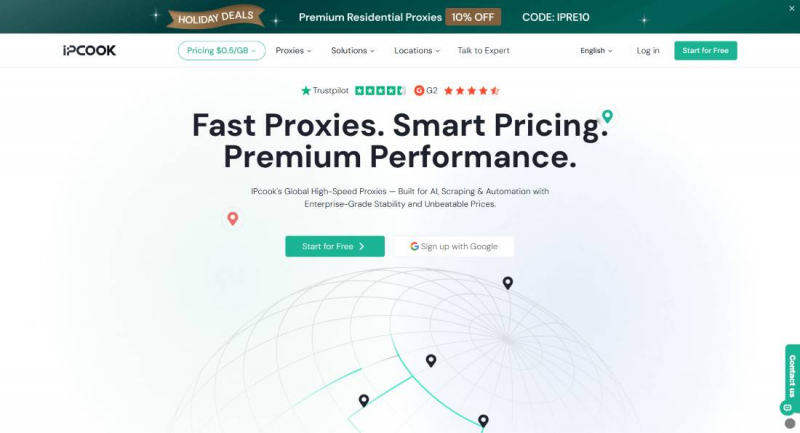
This is where IPcook steps in to bridge the gap between your script and the data, which provides web scraping proxies engineered to handle the high-velocity demands of social media platforms. It ensures that your automated requests appear as legitimate traffic coming from genuine consumer devices. This is because IPcook's pool of high-quality residential proxies originates from the IP addresses of millions of real users worldwide. And it achieves a very high success rate even for the most difficult data scraping operations.
IPcook offers several key advantages:
● Elite Anonymity & Fingerprint Protection: These proxies eliminate all identifying headers so that your TikTok scraper looks like a regular mobile user, preventing shadowbanning.
● Hyper-Localized Trend Access: You can scrape region-specific TikTok trends and hashtag data from any global market by connecting to a network of 55 million IP addresses spanning across 185 countries.
● Affordable Pricing: Bulk orders reduce the cost to as low as $0.5 per GB, making large-scale data usage more cost-effective.
● Permanent Traffic Validity: Since the data you've purchased never expires, you can utilize your balance whenever you want.
● Tailored IP Rotation Logic: To mimic a user browsing a certain creator's feed organically, you can either keep sticky sessions or refresh your IP for each request.
Key Use Cases for TikTok Data
Why do companies put forth so much work to extract data from TikTok? For real-time insights that traditional surveys just cannot match, the platform is a treasure trove. Brands can transform unprocessed social signals into useful tactics by gathering public metadata. The following are the main ways a TikTok scraper might revolutionize your company:
● Competitor Benchmarking: You may monitor how frequently they publish and which of their videos go viral. This enables you to spot holes in your own writing and adjust to changing consumer expectations.
● Content Research: A TikTok video scraper helps you arrange video URLs and descriptions at scale if you need to download or examine particular clips.
● Influencer Discovery: With a dependable TikTok scraper, you can filter creators based on interaction rates rather than follower counts. This guarantees that you collaborate with real voices that actually connect with your target market.
● Trend Forecasting: You can gather data on popular hashtags and sounds. This enables your brand to participate in discussions before they get too crowded.
● Sentiment Analysis: You may learn how consumers feel about particular products by extracting video remarks. To improve your marketing message, you can easily identify consumer complaints or compliments.
Top 3 Ways to Extract Data with a TikTok Scraper
Now that you understand the importance of TikTok data, it's time to extract data with the TikTok scraper. There is no general solution for data extraction. Let's look at three techniques.
1. How to Script Your Own TikTok Scraper with Python From Scratch
The ideal option for developers who want complete control over their data flow is to write a TikTok scraper Python script from scratch. You can specify exactly which fields, like view counts or video descriptions, that you gather using this method. It's ideal for small to medium-sized projects that require you to scrape certain terms for market research, like the iPhone 17 review. Despite its versatility, the biggest disadvantage of this technique is the continual maintenance required to keep up with TikTok's regular code modifications.
Follow these steps to build your own tool:
Step 1: Install necessary libraries like Requests and BeautifulSoup.
Step 2: To prevent IP bans right away, set up your IPcook proxy credentials.
Step 3: To replicate a genuine browser, specify your target search URL and headers.
Step 4: Parse the JSON data hidden within the TikTok page structure.
Here is a functional code example that uses IPcook proxies to securely fetch data:
| import requests from bs4 import BeautifulSoup import json def get_ip(): # Replace {user}, {pass}, {host}, and {port} with your IPcook credentials proxy = 'https://{user}:{pass}@{host}:{port}' url = 'https://ipv4.icanhazip.com' try: response = requests.get(url, proxies={'https': proxy}, timeout=10) response.raise_for_status() return response.text.strip() except requests.exceptions.RequestException as e: return f'Error: {str(e)}' def scrape_tiktok_search(keyword): # Using IPcook proxy to fetch TikTok search results for iPhone 17 reviews proxy_url = 'https://{user}:{pass}@{host}:{port}' proxies = {'https': proxy_url} search_url = f'https://www.tiktok.com/search?q={keyword}' headers = { 'User-Agent': 'Mozilla/5.0 (Windows NT 10.0; Win64; x64) AppleWebKit/537.36 (KHTML, like Gecko) Chrome/120.0.0.0 Safari/537.36' } try: print(f"Using Proxy IP: {get_ip()}") response = requests.get(search_url, headers=headers, proxies=proxies, timeout=15) soup = BeautifulSoup(response.text, 'html.parser') # TikTok often hides data in a script tag with ID __UNIVERSAL_DATA_FOR_REHYDRATION__ script_tag = soup.find('script', id='__UNIVERSAL_DATA_FOR_REHYDRATION__') if script_tag: data = json.loads(script_tag.string) print("Successfully retrieved TikTok data!") return data else: print("Could not find data tag. TikTok might have blocked the request.") except Exception as e: print(f"An error occurred: {e}") # Example usage for iPhone 17 review videos scrape_tiktok_search('iphone 17 review') |
2. Scaling Your Operations with Dedicated TikTok Scraping APIs
Large projects require a different approach. If you need thousands of data points every day, a dedicated TikTok data scraper API is the best path forward. It acts as a middleman between your code and the platform. They handle hard parts like CAPTCHA solving and browser rendering for you. This allows your team to scrape TikTok data at a massive scale without the headache of managing private servers. You should simply monitor your budget, as most API providers bill you based on the total number of successful requests.
To begin scaling your data collection, take these simple steps:
Step 1: Find an API provider for scraping and sign up for an access key.
Step 2: Determine the data fields you want to collect, such as creator statistics or video hashtags.
Step 3: Send your query parameters to the API endpoint using a Python script.
Step 4: Configure your IPcook proxies so that your API calls originate in your target geographic location.
Here is a clear example of how to use a scraping API to gather information about "iPhone 17" videos:
| import requests import json def get_ip(): # Verify your connection through IPcook proxies proxy = 'https://{user}:{pass}@{host}:{port}' url = 'https://ipv4.icanhazip.com' try: response = requests.get(url, proxies={'https': proxy}, timeout=10) return response.text.strip() except Exception as e: return f'Error: {str(e)}' def fetch_api_data(search_term): # Using a standard API request format with IPcook proxy support api_endpoint = "https://api.example-provider.com/tiktok/search" api_key = "YOUR_API_KEY" proxy_url = 'https://{user}:{pass}@{host}:{port}' proxies = {'https': proxy_url} params = { "key": api_key, "q": search_term, "region": "US" } try: print(f"Current Gateway IP: {get_ip()}") response = requests.get(api_endpoint, params=params, proxies=proxies) if response.status_code == 200: result = response.json() print(f"Successfully pulled data for: {search_term}") return result else: print(f"API returned status: {response.status_code}") except Exception as e: print(f"Connection failed: {e}") # Example: Gathering bulk data for iPhone 17 market analysis fetch_api_data("iPhone 17") |
3. Leveraging No-Code TikTok Scrapers to Extract Data Fast
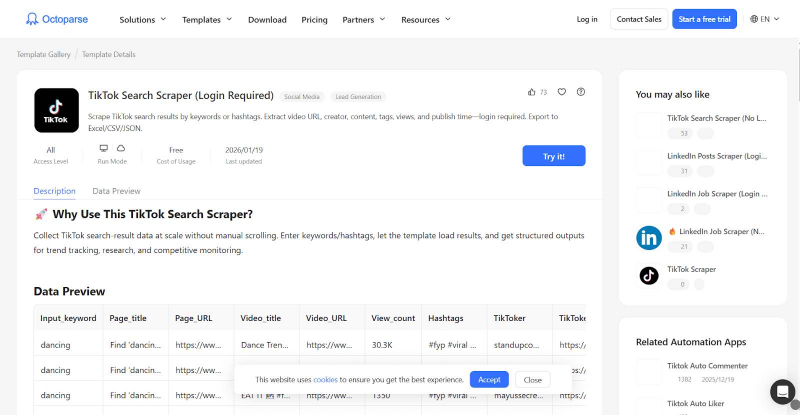
No-code tools are a great way to swiftly scrape TikTok data if you are a marketing expert without a technical background. These are ideal for simple jobs like compiling a list of popular sounds or examining the engagement metrics of a single influencer. Octoparse, WebScraper.io, Instant Data Scraper, and Listly are popular choices. While these tools are simple to use, they often struggle with large amounts of data and can be quickly blocked if a good proxy rotation technique is not used.
To use a tool like Octoparse for your research, follow these steps:
Step 1: Install Octoparse software and open the proxy settings menu.
Step 2: Enter your IPcook credentials to ensure all your browsing activity is masked from the start.
Step 3: Enter the TikTok search URL (e.g., for "iPhone 17") into the built-in browser.
Step 4: Use the "Auto-detect web page data" feature to let the AI identify the video list and scrolling patterns.
Step 5: Preview the data fields, such as the creator's name and the video link, then hit "Run" to begin the extraction.
TikTok Scraping Compliance and Security
Extracting data with a TikTok Scraper requires a careful balance between data collection and ethical boundaries. Generally, scraping is acceptable if you only target public information that does not require a login. However, you enter risky territory if you attempt to access private profiles, bypass paywalls, or harvest personal contact details without permission. To keep your project safe and sustainable, you should follow these essential security practices:
1. Focus on Public Data: Only collect information that a regular visitor can see without an account, such as public video captions, hashtag counts, and view statistics.
2. Protect Personal Privacy: Avoid harvesting sensitive information such as user IDs or private remarks. If your TikTok data scraper catches any personally identifiable information, anonymize it before storing it.
3. Use High-Quality Proxies: Using a reputable network ensures that your activity is spread across numerous IP addresses. This keeps your main connection from getting flagged while ensuring a high success rate.
4. Respect Access Limits: TikTok tracks request frequency. You should implement delays between requests to avoid straining their servers and triggering anti-bot alarms.
5. Follow robots.txt: Always review the site's robots.txt file to determine which directories are off-limits to automated crawlers.
Conclusion
Throughout this article, you've seen three viable ways to extract data with the TikTok scraper: custom Python scripts, automated APIs, and simple no-code tools. Each technique provides considerable advantages for those seeking to scrape TikTok data for market research or trend analysis. To ensure that your project remains stable and untraceable, including a trusted service like IPcook in your process offers the crucial layer of stealth.
Let's create a safe network environment, choose the way that best fits your technical capabilities, and start gathering the information needed to keep up with new trends.
Post Comment
Be the first to post comment!