The world of artificial intelligence (AI) is evolving rapidly, and its impact on small and medium-sized businesses (SMBs) has been transformative. As we approach 2026, AI tools are no longer a luxury reserved for large enterprises—they’re becoming essential for businesses of all sizes, especially those in emerging markets like Africa. The question for SMBs now is not whether they should adopt AI, but how to choose the right AI tools to scale and drive their success.
In this blog post, we’ll guide you through the process of evaluating and selecting AI tools, providing a practical framework you can use to ensure you choose the best AI solutions that fit your business needs. As an artificial intelligence software development company, 10Pearls specializes in helping businesses integrate AI seamlessly into their workflows. By the end of this post, you’ll have a clear understanding of how to approach AI tool selection to optimize operations, improve customer experiences, and drive growth.
Why Choosing the Right AI Tool Matters for Your Business

The importance of choosing the right AI tool cannot be overstated. With so many AI tools on the market, it can be overwhelming to find the perfect fit for your specific business goals. A wrong choice can lead to wasted resources, frustration, and missed opportunities, while the right AI tool can help streamline your operations, increase profitability, and enhance customer satisfaction.
Here’s why selecting the right AI tool is crucial:
1. Business Alignment: Your AI tool must solve a specific problem or help you achieve clear goals. Without alignment, it’s just a fancy piece of technology that doesn’t deliver measurable results.
2. Cost Efficiency: While AI can be a game-changer, the cost of implementing the wrong tool can be significant. By selecting the right tool, you ensure maximum ROI.
3. Scalability: As your business grows, your AI solution must grow with you. Scalable tools will allow you to adapt to increasing data and customer demands without requiring a complete overhaul of your systems.
4. Security and Compliance: With increased reliance on digital tools, data security and regulatory compliance are critical. Choosing an AI tool that ensures secure data handling is a non-negotiable.
This guide will help you evaluate which AI tools are best suited for your business to meet these objectives.
Key Criteria for Evaluating AI Tools

Choosing the right AI tool goes beyond simply picking the one with the most advanced features. It’s about understanding your unique needs and how the tool can help solve your specific challenges. Here’s a detailed framework for evaluating AI tools.
1. Business Fit: Does the Tool Address Your Pain Points?
The first step in evaluating any AI tool is understanding if it addresses your core business challenges. Whether you're in e-commerce, fintech, or healthcare, you need AI tools that are designed to solve industry-specific issues. Ask yourself:
● Does this tool help optimize my operations?
● Will it help me improve customer service or automate workflows?
● Does it integrate with my existing tech stack (CRM, ERP, etc.)?
For example, an e-commerce startup may look for AI tools that enhance product recommendations or automate inventory management, whereas a fintech startup may prioritize AI for fraud detection and risk modeling.
2. Integration and Compatibility: Can It Work with Your Existing Systems?
AI tools must integrate seamlessly with your existing infrastructure. Whether you're using CRM systems, data management platforms, or email marketing tools, your AI solution should work harmoniously with what you already have.
Ask yourself:
● Does the AI tool support APIs or data integration with my current software systems?
● How easily can I integrate this tool with my existing platforms?
● Will this solution require extensive customization or a complete overhaul of my systems?
For example, Salesforce Einstein offers seamless integration with Salesforce CRM, making it an excellent option for businesses already using the Salesforce ecosystem.
3. Security and Privacy: Is Your Data Safe?
With data breaches and cyber threats on the rise, security is a non-negotiable factor. When evaluating AI tools, make sure the solution follows industry best practices for data encryption, secure authentication, and regulatory compliance.
Ask yourself:
● Does the AI tool comply with relevant data protection regulations (GDPR, CCPA, HIPAA)?
● Does it offer secure cloud environments, data encryption, and access control?
● Is the vendor committed to ongoing security updates and patching vulnerabilities?
For SMBs, choosing a tool with built-in compliance features is essential to avoid legal and financial risks associated with data mishandling.
4. Usability: Is It Easy to Use?
Even the most powerful AI tools are useless if they’re too difficult for your team to use. Ideally, the tool should have an intuitive interface, and you shouldn’t need a team of developers to run it.
Ask yourself:
● Is the user interface intuitive and easy to navigate for non-technical users?
● Does it require extensive training, or can my team get started quickly?
● Does it offer customer support or a community for troubleshooting and learning?
In the case of Zoho CRM, its AI-powered features are easy to use and integrate well with its existing suite of sales and marketing tools. This makes it a great choice for SMBs that don’t have dedicated IT departments.
5. Scalability: Can the Tool Grow with Your Business?
As your business grows, your AI tools need to scale accordingly. AI tools should be flexible enough to handle larger datasets, support additional users, and adapt to your evolving business needs without requiring a major upgrade or replacement.
Ask yourself:
● Can the tool handle growing data as my business expands?
● Is it easy to add new features or users as the team scales?
● Will the tool grow with us, or will we have to switch platforms as we scale?
AI tools like HubSpot AI grow with your business. As you scale, they automatically adjust to handle more contacts, more data, and more complex workflows.
Real-World Use Cases of AI Tools for SMBs
AI for Customer Support

SMBs in e-commerce, SaaS, and retail are using AI-powered chatbots and virtual assistants to handle customer inquiries and reduce response times. For example, ChatGPT is widely used by businesses to provide instant support, freeing up customer service teams to focus on complex issues.
AI for Marketing Automation

HubSpot’s AI tools automate the process of lead nurturing, segmenting customers, and personalizing email campaigns. This allows businesses to target the right customers with the right message at the right time, improving their conversion rates and ROI.
AI for Sales Forecasting
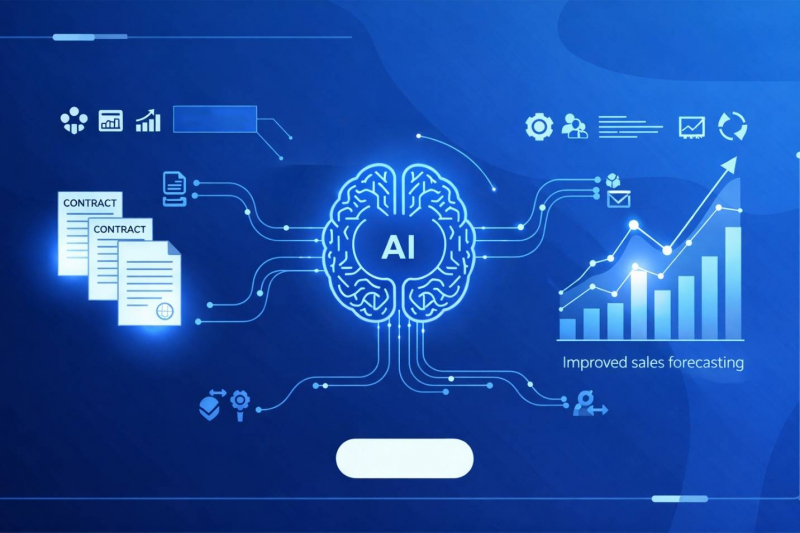
AI tools in the sales industry are helping businesses predict trends, identify opportunities, and forecast sales performance. Salesforce Einstein, for instance, uses predictive analytics to help businesses improve their sales forecasting and lead scoring.
AI for Fraud Detection

For fintech and e-commerce SMBs, AI is critical for fraud detection. By analyzing transaction patterns, AI can detect anomalies in real time, helping businesses reduce financial losses and protect their customers.
How 10Pearls Can Help
As an artificial intelligence software development company, 10Pearls specializes in helping SMBs adopt AI technologies that align with their business needs. Whether you're looking for custom AI solutions, cloud migration, or AI-powered marketing tools, we provide tailored solutions that help businesses scale efficiently while optimizing operations.
By partnering with 10Pearls, you’ll receive expert guidance in choosing, implementing, and scaling the AI tools that drive growth and innovation for your business.
Conclusion: Choosing the Right AI Tool for Your SMB
AI tools have the potential to transform the way SMBs operate, increasing efficiency, improving decision-making, and enhancing customer experiences. By following the structured framework outlined in this post, you can ensure that you select the right AI solutions that will grow with your business.
At 10Pearls, we help businesses navigate the complexities of AI adoption, providing custom AI solutions that are tailored to your unique needs and designed to deliver measurable outcomes. Start scaling your SMB with AI today, and see the difference it can make in your business’s future.
Frequently Asked Questions (FAQs)
1. What should SMBs look for when choosing AI tools?
When selecting AI tools, SMBs should focus on tools that align with their business goals. Key criteria to evaluate include integration capabilities, scalability, security features, and user-friendliness. It's also important to assess how well the tool fits with existing systems and whether it can provide measurable business outcomes such as cost reduction and efficiency improvements.
2. How can AI improve customer experience for SMBs?
AI enhances customer experience by enabling personalized interactions, automating customer support, and providing real-time insights. Tools like chatbots can assist customers 24/7, while AI-powered analytics help businesses predict customer needs and offer tailored services. For example, SMBs can use AI to recommend personalized products, improving engagement and conversion rates.
3. How do AI-powered tools help SMBs scale operations?
AI tools help SMBs scale by automating routine tasks like data entry, customer inquiries, and marketing outreach. This automation frees up employees to focus on strategic initiatives and innovation. AI also helps businesses analyze large datasets, leading to better decision-making and the ability to manage larger workloads without adding extra resources.
4. What role does security play in selecting AI tools?
Data security is a critical factor when evaluating AI tools. Ensure that the tools comply with regulations like GDPR and CCPA and offer end-to-end encryption, access control, and regular security updates. AI tools that prioritize secure data handling are essential to protecting customer information and maintaining compliance.
5. Can AI help SMBs in industries like fintech and e-commerce?
Yes! In fintech, AI helps detect fraud, assess credit risk, and personalize financial services. In e-commerce, AI is used for product recommendations, inventory management, and automated customer support. AI can also help both industries improve customer segmentation, targeting, and marketing automation, enabling SMBs to optimize their operations and improve customer engagement.
6. How can 10Pearls help SMBs integrate AI into their business?
As an artificial intelligence software development company, 10Pearls offers custom AI solutions tailored to your business needs. Whether it’s AI model development, cloud migration, or AI-driven automation, 10Pearls provides end-to-end support to help SMBs seamlessly integrate AI tools into their existing systems, driving growth and innovation.
7. What are the key benefits of automating business processes with AI?
By automating business processes, AI helps SMBs reduce human error, save time, and increase efficiency. This means faster decision-making, improved accuracy, and the ability to handle more tasks without hiring additional staff. For example, AI-powered marketing automation helps SMBs scale their outreach efforts while maintaining a personal touch with customers.
8. What’s the difference between AI tools for SMBs and enterprise-level solutions?
AI tools for SMBs are typically more affordable, user-friendly, and easy to integrate into existing systems without requiring extensive technical knowledge. On the other hand, enterprise-level AI solutions are usually more complex, designed for larger-scale operations, and often require specialized resources to implement and maintain. SMBs can still benefit from AI without the complexity of enterprise tools by choosing solutions that meet their specific needs.
9. How do I measure the ROI of AI tools for my business?
To measure the ROI of AI tools, track the efficiency gains, cost savings, and business outcomes they deliver. For example, if an AI tool helps automate customer support, measure the time saved, reduction in manual work, and improved customer satisfaction. You can also assess how the tool contributes to revenue growth, whether through increased conversions, better targeting, or operational cost reductions.
10. How do I choose the right AI tool for my business?
Start by identifying the specific problem you want to solve with AI. Whether it’s customer support, data analytics, or marketing automation, make sure the tool fits your business goals. Use the evaluation framework in this article to assess the tool based on performance, cost, integration, and scalability. Consider starting with a pilot project to test the AI tool before a full-scale implementation.
Post Comment
Be the first to post comment!