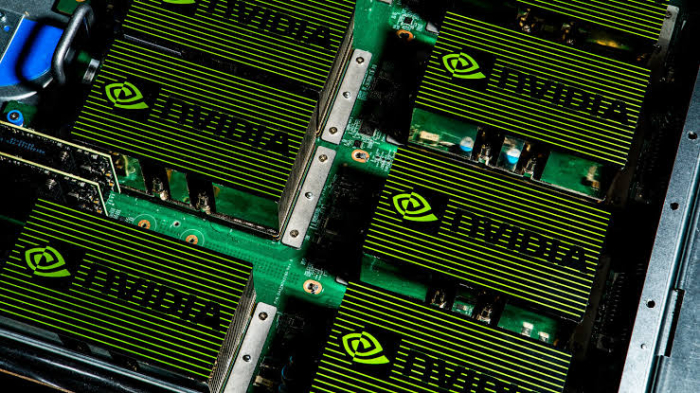
Artificial intelligence is placing unprecedented pressure on computing infrastructure. As AI models grow larger and data centers expand, advanced chips are consuming more electricity and producing more heat. That creates a major challenge for semiconductor companies, which must find ways to improve performance without allowing energy use and cooling requirements to spiral upward.
Startup Discovered Materials believes part of the solution could come from redesigning the materials used inside chips.
The company is applying artificial intelligence, physics simulations, and laboratory testing to search for materials that could help semiconductors operate more efficiently. Instead of relying primarily on researchers manually evaluating a limited number of possibilities, the startup wants AI systems to explore thousands of potential materials and identify the most promising candidates.
Traditional materials research can be slow because scientists must evaluate countless combinations of elements and atomic structures. Even experienced researchers can examine only a limited number of possibilities manually.
Discovered Materials is attempting to dramatically expand that search.
The startup has built a software system that uses AI agents to propose potential materials. Those candidates are then tested using physics-based computational models designed to determine whether their properties are suitable for semiconductor applications.
This approach allows the company to explore thousands of possibilities continuously instead of depending entirely on individual researchers making hypotheses one at a time.
The goal is not simply to discover something new. Discovered Materials is particularly interested in finding materials capable of addressing thermal problems inside advanced chips.
Modern AI processors perform enormous numbers of calculations every second. The computing power required for training and operating large AI models generates considerable heat.
Data centers therefore need sophisticated cooling systems to keep their hardware operating safely. Those systems consume additional electricity, adding to the already significant energy demands associated with AI infrastructure.
Finding semiconductor materials with better thermal characteristics could help reduce some of those pressures.
A material that generates less heat, moves heat away from critical components more effectively, or allows chips to operate efficiently under demanding conditions could become valuable to semiconductor manufacturers.
However, discovering such a material is only the beginning.
One of the biggest challenges in materials science is that improving one characteristic can create problems elsewhere.
A material might perform extremely well at dissipating heat but have poor electrical properties. Another material could look excellent in simulations but prove extremely difficult or expensive to manufacture.
Semiconductor production also requires extraordinary precision. Materials must survive complex manufacturing processes while maintaining reliable electrical, thermal, and mechanical characteristics.
That means researchers cannot simply optimize one variable.
Discovered Materials must search for candidates in which several desirable properties appear at the same time. AI can help explore this enormous design space, but experimental testing remains essential before a candidate can be considered useful.
Discovered Materials combines computational discovery with physical experimentation.
Once its AI systems identify promising candidates, researchers can investigate whether those materials can actually be produced and whether their real-world behavior matches predictions.
This step represents one of the major limitations of AI-driven materials science.
Software can generate potential candidates extremely quickly. Physical experiments still require equipment, preparation, manufacturing processes, and careful measurement. Those steps cannot necessarily accelerate at the same rate as AI computation.
As AI becomes better at generating ideas, laboratory validation could increasingly become the bottleneck.
Investor interest in the concept has already resulted in significant early funding.
Discovered Materials has raised a $9 million seed round led by Lightspeed India Partners. Peak XV Partners also participated, alongside angel investors including Paul Graham, Gokul Rajaram, and Thariq Shihipar.
The company was founded by Advaith Sridhar and Akash Ramdas.
Ramdas brings a background in materials science, including doctoral research at Stanford, while Sridhar has experience working with AI agents. Their combination of materials expertise and artificial intelligence reflects the company's broader strategy of connecting computational discovery directly with scientific experimentation.
Rather than becoming a chip manufacturer itself, Discovered Materials could eventually make money from the intellectual property created through its discoveries.
When the company identifies useful materials, it plans to explore patents covering their application inside technologies such as GPUs or the manufacturing techniques needed to incorporate them into semiconductor products.
Those patents could eventually be licensed to chipmakers.
This model could allow the company to participate in the semiconductor industry without taking on the enormous expense of building and operating advanced fabrication facilities.
The value of the business, however, will ultimately depend on whether its discoveries can move beyond simulations and laboratory experiments into commercially viable semiconductor manufacturing.
Discovered Materials is not alone in using artificial intelligence to accelerate materials science.
A growing group of startups, technology companies, and research organizations are developing AI systems that can predict chemical structures, evaluate material properties, and search enormous collections of possible compounds.
The broader promise is significant.
Materials discovery has traditionally required years of experimentation. AI could help researchers eliminate weak candidates earlier, focus laboratory resources on more promising options, and explore combinations that humans might never consider manually.
As foundation models and scientific AI systems improve, generating possible materials could eventually become relatively easy.
The harder problem may be determining which predictions matter.
AI systems can potentially generate enormous numbers of theoretical materials, but semiconductor companies do not need endless lists of candidates. They need materials that work reliably, can be manufactured at scale, fit existing or future production processes, and deliver meaningful economic advantages.
That makes filtering increasingly important.
The strongest materials discovery companies may therefore be those that combine AI prediction with deep scientific knowledge, accurate simulation tools, experimental capabilities, and an understanding of industrial manufacturing.
Discovered Materials is betting that its specialized focus on semiconductor thermal challenges will help it compete even as larger AI laboratories develop increasingly powerful scientific models.
The rapid expansion of AI is creating demand not only for faster processors but also for technologies that make those processors cheaper and more efficient to operate.
Better cooling systems will remain important, but improvements inside the chips themselves could have an equally significant impact.
If AI-assisted materials discovery can produce semiconductors that generate less heat or handle thermal energy more effectively, data centers could potentially achieve greater computing performance without equivalent increases in power and cooling requirements.
Discovered Materials is still at an early stage, and the path from promising material to mass-produced semiconductor can be long.
But its approach highlights a broader shift in artificial intelligence. AI is no longer being used only to write software, generate images, or process information. Increasingly, researchers are asking it to help discover the physical materials from which the next generation of technology will be built.
Share your thoughts about this article.
Be the first to post a comment!