The way high-stakes decisions are made will change dramatically when there is real money at risk for a company’s reputation and long-term strategy, which is why data-driven insights are so important now. The decision-making process can be more confident and faster when leaders make decisions with clarity, based on evidence rather than hopeful assumptions. Clarity through evidence gives companies the confidence to take more risks without being reckless or blind.
At the same time, companies have never had more access to information, which changes how decisions are made from the outset. Teams no longer wait for quarterly reports. They look at live metrics, meaningful patterns, and predictive signals, turning what used to feel risky into something guided and calculated.
The impact this has had, and continues to have, in many industries that require immediate action, such as in financial services, healthcare, real estate, and larger-scale technology environments, is that decision-makers have a sense of clarity, which helps protect investment dollars and open up new, brilliant opportunity areas. With clarity from data, even the most aggressive strategies begin to appear measured (and not reckless), and that fundamentally changes how companies view significant events.
Turning complex data into strategic clarity
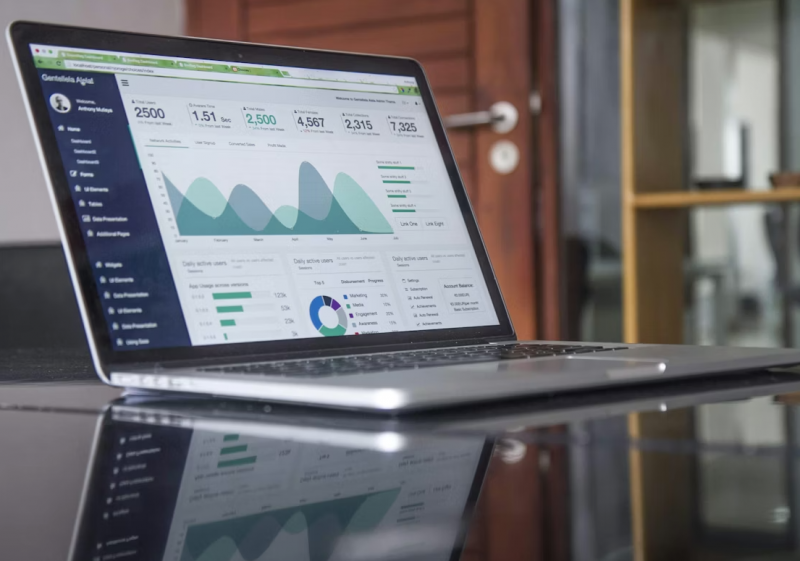
Turning large volumes of raw numbers into something leaders can actually use requires structure, tools, and the correct thinking. Many organizations rely on frameworks such as LandTech Grey Belt insights to make sense of complicated information, because a clear method reduces uncertainty. When teams understand what the data truly means, strategic direction suddenly feels sharper and far easier to act on.
Building data confidence across leadership teams
In many cases, leadership teams rely on a reliable data source; however, trust is not automatic, particularly when decisions carry significant consequences. Therefore, before executives rely on analytics, companies must have consistently measured results from transparent processes and a shared understanding. When all parties understand the process for collecting numbers and what those numbers mean, it builds confidence and enables a transition from theory to practice in daily business decision-making.
When trust is developed in this way, boardroom discussions will be very different: instead of speculating or arguing over opinions, leaders will discuss the merits of various scenarios based on empirical evidence and realistic projections. This type of corporate culture reduces unnecessary fear while appropriately respecting risk, enabling organizations to make purposeful, rather than hesitant, decisions when essential business decisions arise.
From dashboards to decisions
Many companies have excellent dashboards; however, many fail to turn their dashboard visualizations into actionable information. Typically, the challenge arises when deciding how to act after interpreting the numbers. Teams that connect planning conversations with their analysis (or analytics) transform the "decorative" nature of data into actual strategic guidance for the organization.
Typically, organizations that bridge the gap incorporate analytics into all critical conversations, rather than creating another report. Therefore, investment, expansion, and operational change decisions are better defined when data are available at the outset of the process. As a result of this disciplined approach to connecting data to decision-making, organizations build momentum over time, enabling leaders to make bolder decisions with greater confidence.
Smarter research and insight validation at scale
High-stakes business decisions feel safer when leaders know their information accurately reflects reality, which is why smarter research plays such a crucial role today. Companies rely on structured data, verified audience insights, and credible feedback sources because, according to Attest specialists, the best survey tools help teams collect meaningful responses, reduce assumption-driven thinking, and support decisions with confidence rather than guesswork.
Enhancing accuracy in market understanding
For businesses to take a closer look at opportunities, enter new markets, or create products that better meet needs, their knowledge of their target audience is much more valuable. Tools available today enable groups to understand behavior, preferences, and expectations in ways that were never possible before.
By using this type of information, companies can get away from making decisions based on hunches and make more informed, factual decisions. The greater understanding gives each of these strategic decisions a sense of being more thoughtfully made and more carefully considered.
A second significant advantage comes from the combination of objective information (numbers) and subjective, real-life experience (customer insights). As such, when groups use both objective and subjective information, the information feels less cold and more grounded in reality. This mix of objective and subjective information enables better-quality decision-making; as such, leaders can understand what is occurring and how others are reacting.
Reducing uncertainty before major moves
Before investing in large-scale initiatives, companies seek to minimize unknowns, and innovative research is an effective way to do so. Organizations will be able to assess new ideas, confirm or invalidate prior assumptions, and identify weaknesses before they become costly issues. Innovative research enables organizations to protect their budgets, make timely decisions, and develop fact-based, lower-risk strategic plans.
Innovative research also allows for continuous learning; the business climate changes rapidly, and yesterday's data may not apply to today's or tomorrow's decision-making. The teams that collect regular feedback remain aligned with current realities rather than with expectations from the past. A consistent stream of information to a team supports safe decision-making, enabling important decisions to be made with relevant, accurate information and awareness, rather than speculative predictions.
Visual intelligence and real-time behavioral insights
Why do we believe that leaders find such great benefit in how people really act as opposed to how people may think? For this reason, modern visual analytics and evolving video marketing trends have taken center stage.
To determine what works better, accelerate campaign improvements, and provide confidence to decision-makers in competitive environments, marketing teams use engagement tracking, performance measurement, and real-time viewing behavior.
Understanding behavior through modern visual data
Video has incredible power because people often reveal their real desires through how they view, pause, rewind, or stop watching. Companies that study these signals stop making guesses about what the audience likes and begin to learn from actual behavior. This level of honesty enables teams to craft messages that resonate with the audience, making them more engaging and more likely to elicit meaningful responses.
In addition to other analytics, visual heatmaps, watch-time insights, and interaction breakdowns allow organizations to gain deeper insight into viewers' attention and intent.
Rather than looking only at surface-level numbers, leaders can see how viewers emotionally connect with the content, which scenes receive the most attention, and where interest declines. With a greater understanding of these details, brands can develop communication strategies with much greater accuracy, supporting better decision-making.
Turning engagement signals into a strategic advantage
To make engagement metrics as effective as possible, teams need to analyze them against their strategy rather than simply reporting on them post-campaign. When companies respond to "real-time" (audience) signals, this allows the company to shift messaging, creative direction, timing, etc., so that the activity remains active and therefore remains positive and continues to perform well as opposed to accepting poor results. Learning quickly is key to having better results.
This responsiveness does more than improve campaign success; it strengthens brand credibility, customer trust, and long-term performance. Companies that understand their audiences at this level of detail adapt faster, speak more clearly, and create experiences that feel relevant rather than generic. That ability to transform raw engagement into confident strategic action becomes a significant advantage in high-stakes decision-making environments.
Cultivating organizations built around insight rather than instinct
High-stakes business environments reward clarity, discipline, and consistent decision-making, which is why so many leading companies build cultures centered on evidence rather than impulse. When data thinking becomes part of daily operations rather than an occasional reference point, decisions feel more grounded, employees feel aligned, and leadership gains the confidence to pursue growth without unnecessary hesitation or emotional influence.
Embedding data discipline into everyday operations
Companies that are serious about learning from their insights do not treat analytics as a standalone task; they integrate it into meetings, planning sessions, resource allocation, and performance reviews so that everyone expects to reference meaningful information.
This habit will eventually increase accountability because, when choices are made, there is a clear rationale, they are justifiable (i.e., measurable), and there is a shared understanding of how "success" is defined.
In addition to creating accountability, culture significantly affects whether employees feel at ease using data, or see it as a barrier because the technical aspects of the data create barriers to entry. As long as companies provide employees with training, supportive leadership, and easy-to-access tools, employees will no longer fear using numbers and will become proactive in their use.
Where confident decisions come from
High-stakes choices never feel simple, but evidence-backed thinking makes them far easier to handle. When organizations trust real insight, they reduce guesswork, protect investments, and move forward with greater certainty.
The next step is clear: integrate data into every critical decision, challenge assumptions with real evidence, and make insight-driven action a habit, not an exception. The companies that do this won’t just survive high-stakes moments; they’ll thrive in them.
By Srdjan Gombar
Veteran content writer, published author, and amateur boxer. Srdjan has a Bachelor of Arts in English Language & Literature and is passionate about technology, pop culture, and self-improvement. In his free time, he reads, watches movies, and plays Super Mario Bros. with his son.
Post Comment
Be the first to post comment!