Table of Content
- Why do people even look for tools like Coupert in the first place
- What Coupert actually does
- The first real sign of legitimacy: visibility, not secrecy
- Real users, real experiences
- The privacy question people are right to ask
- How Coupert makes money
- Who Coupert feels right for, and who it doesn’t
- The emotional side of “legit”: how it feels to use
- So, is Coupert legit?
We’ve all been there.
You’re shopping online, you reach the checkout page, and a small voice in your head says, “What if there was a coupon I missed?”
That moment of doubt is exactly where tools like Coupert enter the picture.
But before installing anything that touches your browser, your cart, or your money, a fair question naturally comes up:
Is Coupert legit, or is it one of those tools that sounds helpful but creates more frustration than savings?
This review isn’t written to hype it up, or tear it down. It’s written to help you decide, calmly and confidently.
Why do people even look for tools like Coupert in the first place
_1770280876.jpg)
Online shopping used to feel simple. Now it feels layered.
There are discounts, flash sales, hidden codes, app-only deals, and cashback offers that may or may not apply depending on timing. Manually chasing all of that is tiring, and honestly, most people just give up and pay full price.
That’s where browser-based coupon tools started gaining attention, not because people love extensions, but because they want less mental effort at checkout.
Coupert positions itself right in that space: quiet, automatic, and meant to step in only when it’s useful.
What Coupert actually does
At its simplest, Coupert acts like a quiet shopping companion. It lives in your browser or phone and waits until you’re already doing what you intended to do, shopping online. When you land on a supported store and move toward checkout, that’s when it steps in.
Instead of asking you to search for codes or copy-paste discounts from random websites, Coupert automatically tests available coupon codes behind the scenes. If the store supports cashback, it also attempts to activate that reward at the same time.
What’s important is what it doesn’t do.
There’s no dashboard demanding your attention.
There’s no separate marketplace pushing you to shop through specific links.
There’s no constant reminder that you “could be saving more.”
Coupert doesn’t try to redirect your behavior; it adapts to it. You shop the way you normally would, and the tool simply responds when it can add value.
That subtlety matters more than most people realize. Tools that constantly demand interaction tend to feel intrusive, even if they technically work. Over time, that friction erodes trust. Tools that stay quiet until they’re relevant often feel more respectful of the user’s time and intent.
When a coupon applies, it feels like a small, effortless win.
When nothing applies, there’s no penalty, no pressure, no sense of failure.
That patience, waiting instead of pushing, is often what separates a genuinely useful assistant from something that feels manipulative. And over repeated use, that calm, reactive behavior is what allows trust to build naturally rather than being forced.
The first real sign of legitimacy: visibility, not secrecy
One of the clearest red flags with scammy tools isn’t what they promise; it’s how difficult they are to verify. Shady extensions often live on obscure websites, avoid well-known app stores, and provide little to no public information about who runs them or how they work.
Coupert takes the opposite approach. It’s present on major browser extension platforms and app stores, where visibility comes with accountability. These platforms don’t guarantee perfection, but they do create friction for bad actors. Listings can be reviewed, flagged, and removed. That alone filters out a large portion of short-term scams.
Beyond distribution, Coupert maintains public documentation that explains what the tool does, how it works, and what kind of data access it requires. This kind of openness doesn’t eliminate every concern, but it shows a willingness to be examined rather than avoided.
Scams rely on obscurity. Legitimate tools are forced to operate in the open.
Real users, real experiences
When people search for reviews, they often expect a clean verdict: good or bad. Real products don’t work that way.
If you browse through user feedback, you’ll notice a recurring pattern. Some users describe small but meaningful wins, finding a coupon they wouldn’t have searched for manually, or saving money without interrupting their shopping flow. These moments feel satisfying because they require no extra effort.
At the same time, other users express frustration, particularly around cashback not tracking as expected. This contrast can feel confusing until you understand how cashback systems actually work.
Cashback is not a simple on/off switch. It depends on:
- Retailer-specific rules and exclusions
- Browser cookies and tracking permissions
- Interference from ad blockers or privacy tools
- Payment methods, returns, or order modifications
When any one of these variables breaks, the experience feels personal to the user—even if the system behaved as designed.
That frustration is real. But frustration alone doesn’t equal fraud.
The privacy question people are right to ask
Let’s be honest: any extension that interacts with checkout pages deserves scrutiny.
Coupert requires access to shopping pages so it can detect carts, apply coupons, and track eligibility. That’s not unusual for this category, but it’s still a trade-off.
What matters is transparency, and here, Coupert clearly explains what kind of access it needs and why. There’s no attempt to disguise permissions or sneak functionality behind vague descriptions.
A smart, balanced approach many users take is simple:
Enable it when shopping, disable it when not.
That mindset reflects trust with boundaries, which is healthy.
How Coupert makes money
Coupert earns through affiliate partnerships when a purchase is successfully tracked. This is the same revenue model used by most cashback platforms.
Why is this important?
Because scams usually rely on one-time exploitation.
Affiliate tools rely on repeat usage and long-term credibility.
If users consistently felt cheated, the model wouldn’t survive. The fact that Coupert continues to operate at scale suggests it delivers enough real value to remain viable.
Who Coupert feels right for, and who it doesn’t
Coupert tends to work best for people who:
- Want automatic coupon checking without extra effort
- Treat cashback as a bonus, not an entitlement
- Prefer subtle tools that don’t interrupt shopping flow
It may not feel right if:
- You expect cashback to track flawlessly every single time
- You rely heavily on cashback payouts rather than instant discounts
- You’re uncomfortable with browser extensions in general
Understanding this upfront avoids disappointment and sets realistic expectations.
The emotional side of “legit”: how it feels to use
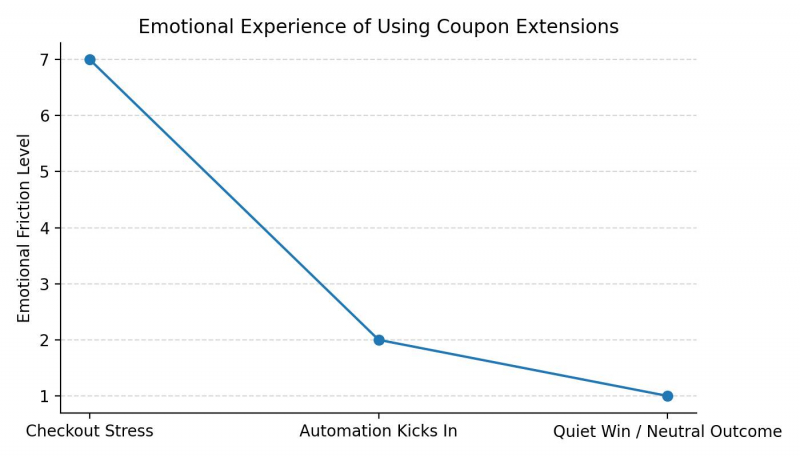
This is the part most reviews skip, but it’s often the part people remember.
Using Coupert doesn’t feel like being sold to. It doesn’t interrupt your shopping with urgency, countdowns, or flashing prompts designed to push impulsive decisions. There’s no sense that you’re being nudged to buy more just because a tool is present.
Most of the time, Coupert stays out of the way. It waits until checkout, checks quietly, and then steps back. That restraint matters. Products built to manipulate behavior usually make themselves impossible to ignore. Products built for utility tend to know when to be silent.
When Coupert works, when it finds a valid coupon or applies a discount, the feeling is subtle but satisfying. It’s not excitement; it’s relief. The sense that you avoided overpaying without having to work for it. A small win that doesn’t demand celebration.
And when it doesn’t work, something equally important happens: nothing. There’s no aggressive retry loop, no guilt-inducing message about “missed savings,” no pressure to keep clicking. It simply fades into the background and lets you move on.
That emotional neutrality is easy to overlook, but it’s meaningful. Tools that respect your attention tend to earn trust over time. They don’t rely on anxiety, urgency, or behavioral tricks to justify their existence.
In a space where many extensions compete by being louder, Coupert’s quiet presence becomes a signal in itself, not of perfection, but of intent.
And intent is often the first thing people sense when deciding whether a tool feels legitimate or not.
So, is Coupert legit?
Yes, Coupert appears to be a legitimate coupon and cashback tool, operating within the same realistic constraints as others in its space.
It’s not magic.
It doesn’t guarantee savings every time.
But it also doesn’t rely on deception or unrealistic promises.
When used with the right expectations, it can make online shopping feel a little less stressful and a little more rewarding.
Post Comment
Be the first to post comment!