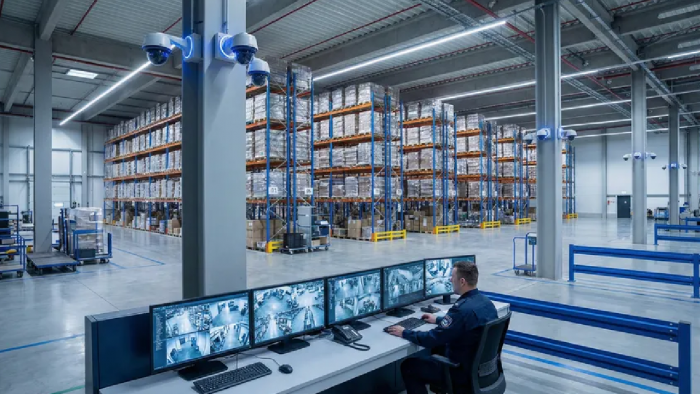
Warehouses aren't quiet storage rooms anymore; they're profit engines where every wasted step trims your margin.
Labor shortages, space squeezes, and same-day shipping promises sneak in hidden costs—overtime, chargebacks, and rush freight—that never hit the budget line.
According to SupplyChain360, poor slotting alone can drain up to six percent of operating profit.
Choose the right warehouse management system (WMS), and you expose those leaks before they sap cash. We sifted analyst reports and real-world wins to spotlight seven platforms built to protect your bottom line.
How we ranked the WMS platforms
_1774615986.jpg)
We didn't chase shiny features. We focused on what chips away at cash.
First, we weighted operating-cost impact at 40 percent. If a system cuts labor hours, eliminates mis-picks, or frees space, it scored high. Cost leaks rarely hide forever; they show up as inefficient pick paths, excess inventory tying up capital, and recurring stockouts that frustrate customers. Those are classic signs you need warehouse optimization, and recognizing them early helps you weight each WMS criterion against real-world pain rather than vendor hype.
Next came time-to-value and ROI, worth 20 percent. Fast cloud deployments and subscription models beat multi-year rollouts every time.
Feature depth earned 15 percent. We looked for live AI slotting, real-time labor analytics, and robotics orchestration—tools that keep teams off spreadsheets.
Scalability and integration claimed another 15 percent. A strong WMS grows with volume and plugs cleanly into ERP, e-commerce, and automation stacks; hidden IT workarounds are just hidden costs by another name.
Finally, vendor track record and user satisfaction filled the last 10 percent. Gartner's 2025 Magic Quadrant, which names Manhattan, Blue Yonder, and Körber as execution and vision leaders, shaped this lens, as did hundreds of frontline reviews from aksi.co (published January 15, 2025).
The result is a cost-focused scorecard that spotlights seven platforms because they pay for themselves fast.
Meet the seven cost-cutting WMS platforms
1. Microsoft Dynamics 365 Supply Chain Management
_1774616009.jpg)
If you already run on Microsoft, this WMS feels integrated rather than bolted on.
Dynamics' new AI slotting engine tracks demand in real time and shifts fast movers closer to pack stations. Pickers walk fewer miles, orders leave sooner, and overtime drops.
Because the module lives inside the Microsoft cloud, inventory, finance, and customer service share one source of truth. You spot aging stock before a fire-sale looms, and you catch ghost inventory before it sparks panic buys.
The February 2026 release adds built-in labor management. Schedules pull from live workload forecasts, so you cover peaks without paying weekend premiums. No exports, no spreadsheets, no guessing.
Scaling up stays simple. Need more throughput for holiday season? Dial up Azure capacity instead of pouring concrete. Pricing remains consumption-based, so capital stays in your pocket.
The trade-off is complexity. A full Dynamics rollout calls for seasoned architects and tight change control. If you already run Microsoft and hidden costs are the enemy, few tools link efficiency gains this quickly.
2. SAP Extended Warehouse Management
Imagine your distribution center the size of an airport. Every pallet, batch number, and expiry date must land on time—that is where SAP EWM excels.
Its predictive labor planning runs continual what-if scenarios, then staffs shifts to the real workload. Early adopters report trimming planning overhead by 20 percent and cutting overtime in the same quarter.
Built-in compliance safeguards watch shelf life, serial numbers, and retailer labeling rules. Mistakes that once sparked chargebacks vanish before the trailer door closes.
Space equals money, so EWM's wave and slotting tools squeeze every cubic inch. Many users postpone costly expansions after uncovering hidden capacity.
Because EWM lives inside the broader SAP ERP, finance, procurement, and warehouse teams view inventory through the same lens. Safety stock shrinks instead of bloats.
The trade-off is time and budget. A full EWM rollout takes commitment, and you need SAP expertise on call. For global manufacturers with zero tolerance for errors, the payoff proves worth the effort.
3. Manhattan Active Warehouse Management
_1774616039.jpg)
Step into your high-volume retail DC running Manhattan Active and you can feel the choreography. Robots ferry totes, pickers glide in tight loops, and orders flow like clockwork. That harmony comes from Manhattan's optimization engine working minute by minute.
The software treats every asset—human or robotic—as a resource on the same digital whiteboard. Tasks interleave so no one stands idle and no conveyor backs up. One customer cut average travel distance 15 percent after the system redesigned pick paths.
Automation hooks arrive prewired. Connect an AMR fleet or a shuttle system, and Manhattan orchestrates it without middleware workarounds. Throughput climbs while headcount stays flat.
Labor management is direct and data-driven. Real-time dashboards flag lagging zones before they snowball into overtime. Incentive programs link to measured productivity, turning cost centers into performance games.
Manhattan ships as true SaaS, so you never schedule another upgrade weekend. New features arrive monthly, keeping your warehouse ahead of rising service expectations without fresh capital outlays.
Investment is substantial, and the learning curve is steep. Yet for operations that live or die on speed and accuracy, the payoff shows up in every avoided re-pick, every on-time truck, and every paycheck that no longer needs extra hours.
4. Blue Yonder Warehouse Management
_1774616057.jpg)
Blue Yonder doesn't just replay what happened; it shows you what each pick, return, or delay costs per unit and per customer. You finally see the bleed, not just the symptom.
The Luminate platform crunches live scan data and surfaces a cost-to-serve dashboard. Slow sellers hogging prime space appear in red. One client re-slotted and freed 20 percent of a congested aisle while trimming touches per order.
People and robots share equal billing. If an AMR stalls or a picker falls behind, machine learning reassigns tasks before orders back up. Idle assets flip into productive minutes instead of expensive dead time.
Yard and dock vision add another layer of savings. Cameras spot trailers the moment they arrive, match them to open doors, and cut detention fees that once hid in freight bills.
Returns, the silent profit killer, get triaged automatically. Items worth more than the handling cost flow back to stock the same shift; junk diverts before it burns labor.
Implementation is complex and licensing sits at the high end. For enterprises chasing a single truth across planning, transportation, and fulfillment, Blue Yonder pays off with fewer touches, faster turns, and clear dollar proof for every choice.
5. Oracle Warehouse Management Cloud
_1774616078.jpg)
Oracle's WMS grew out of LogFire, yet the current cloud suite feels built for 2026 realities: fast launches, constant updates, and analytics on tap.
Deployments often go live in months, not years, so you stop bleeding money from manual processes sooner. Because every customer runs the same code line, new features arrive automatically without disruption or consultant invoices.
Dashboards matter. Oracle's real-time heat maps flag zones where picks stall or replenishments lag. Supervisors shift labor before the wave collapses, avoiding costly next-day air.
Machine-learning models watch demand spikes and suggest replenishment before locations empty. That foresight prevents emergency put-aways and keeps carriers off overtime.
The digital-twin layout tool lets you test slotting moves virtually. Users have found 10 percent more capacity by simulating aisle tweaks before touching a pallet. Capital budgets breathe easier when you squeeze an extra year from current square footage.
Tight hooks to Oracle ERP and NetSuite keep inventory, finance, and transportation speaking the same language. Ghost stock disappears, and CFOs see working-capital gains on the ledger, not just in ops chatter.
The interface takes training, and transaction-based pricing can rise with huge volumes. For mid-to-large operations seeking quick ROI and cloud agility, Oracle WMS delivers savings you can plot on a P&L.
6. Infor CloudSuite WMS
Infor's calling card is visibility you can walk through. Its 3D Visual Warehouse paints a live digital twin of racks, pick faces, and work queues. Managers zoom in, spot congestion, and re-slot goods before the aisle locks up. One user uncovered a dead zone, shifted SKUs, and gained 10 percent more throughput without adding payroll.
Task automation is built in. Voice picking, task interleaving, and light WCS controls keep associates moving with purpose, while labor dashboards flag outliers early. Fewer mis-picks, fewer "where's my order" calls, and a measurable dip in rework hours follow.
Infor understands 3PL math. Multi-client billing tracks every touch, carton, and value-added service so revenue stops leaking through unbilled work. Clients get self-service portals, which cuts status emails and builds stickier relationships.
Deployment stays flexible: choose public cloud for speed or on-prem for strict data rules. Either way, subscription pricing undercuts the Manhattan and Blue Yonder tier, making Tier 1 capability reachable for mid-market operators.
The learning curve is real, and the community is smaller, yet if you value customization, visualization, and 3PL-friendly cash flow, Infor CloudSuite WMS fits the bill.
7. Extensiv 3PL Warehouse Manager
_1774616142.jpg)
Growing 3PLs often drown in admin work before pallets pile up. Extensiv fixes that by automating the back office first and the warehouse second.
Every pick, pack, and pallet feeds into built-in billing. No more chasing spreadsheets to prove you wrapped 50 extra bundles. One early adopter cut month-end invoicing by four days and captured charges that had slipped through.
Prebuilt connectors link Shopify, Amazon, WooCommerce, and dozens more carts in an afternoon. Orders flow in cleanly, tracking flows out automatically, and manual keystrokes vanish along with the typos that trigger returns.
Go-lives average 45 days because Extensiv ships as SaaS with a guided setup. A quicker start means quicker payback when cash is tight and growth is spiking.
The system enforces barcode scans at every hop, so inventory accuracy rises while customer emails about stockouts fade. Wave planning even checks available labor, preventing those midnight "all-hands" texts.
Extensiv will not run a mega DC full of shuttles, and reporting depth is lighter than enterprise suites. Yet for mid-market 3PLs and brands scaling e-commerce fulfillment, it drives one of the lowest costs per order you can achieve without adding an IT team.
Side by side at a glance
_1774616157.jpg)
You have seven strong contenders, but strengths differ. Use the grid below to match each platform to your biggest pain point—labor, space, speed, or cash flow.
| WMS | Signature cost-saving move | Watch-outs | Best fit |
| Microsoft D365 SCM | AI slotting trims pick miles, and the Microsoft stack cuts data silos | Requires deep Microsoft expertise | Manufacturers and distributors already on Azure |
| SAP EWM | Predictive labor planning slashes overtime and penalties | Lengthy, high-budget rollout | Global enterprises with strict compliance |
| Manhattan Active | Orchestrates people and robots for maximum throughput | Premium price and complexity | High-volume retail or 3PL mega sites |
| Blue Yonder | Real-time cost-to-serve reveals hidden margins | Enterprise-grade implementation effort | Omnichannel giants seeking end-to-end clarity |
| Oracle WMS Cloud | Quick SaaS go-live plus digital twin space gains | UI training curve; usage-based fees | Mid-to-large firms needing fast ROI |
| Infor CloudSuite | 3D visual warehouse and 3PL billing stop revenue leaks | Smaller community; tuning required | 3PLs and manufacturers wanting flexibility |
| Extensiv 3PL | Auto billing and plug-and-play connectors speed cash | Limited advanced automation depth | Growth-stage 3PLs and e-commerce fulfillers |
Conclusion
Scan the row that solves your most expensive leak today, not the one that simply looks impressive on paper. That single alignment decision usually decides ROI.
Post Comment
Be the first to post comment!