Let’s be honest.
Landing pages used to be slow, expensive, and frustrating to build. You either hired a designer, wrestled with WordPress, or spent hours tweaking templates that still did not convert the way you hoped.
In 2026, that reality has changed fast.
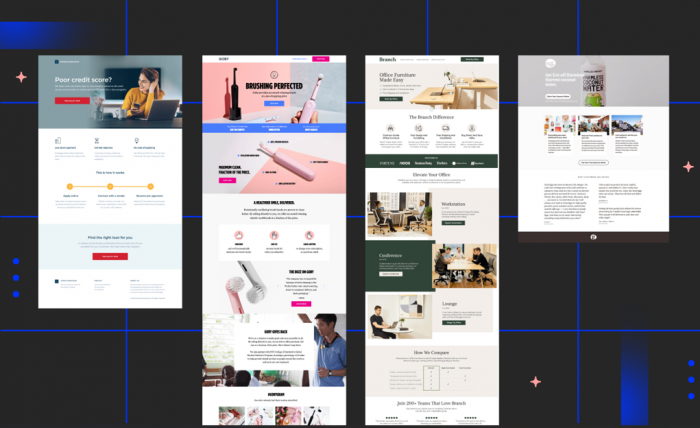
AI landing page builders are now capable of generating full page layouts, writing conversion focused copy, suggesting design elements, and even optimizing for SEO and performance. Many tools can produce a publish ready page in minutes instead of days. The result is not just speed. It is accessibility. Solo founders, marketers, and small teams can now launch professional funnels without heavy technical overhead.
But here is what most generic lists get wrong.
Not all AI landing page tools are built for the same job. Some prioritize raw speed. Others focus on email funnel integration. A few are designed specifically for high conversion marketing teams. Choosing the right one depends entirely on your use case and growth stage.
So instead of hype, here is a grounded breakdown of the best AI tools for landing page creation in 2026 and where each one actually fits.
What Actually Matters in an AI Landing Page Builder
Before jumping into tools, it is important to understand what separates a serious landing page platform from something that just produces pretty layouts.
Modern evaluators typically look for a mix of usability, conversion features, and AI depth. According to expert testing, strong landing page builders should emphasize ease of use, template availability, conversion testing, custom domains, and lead capture features like forms and pop ups.
In practical terms, the most competitive AI builders today are judged on:
- Speed from prompt to publish
- Quality of AI generated copy
- Design flexibility
- Built in conversion tools
- Integration with marketing stacks
- Scalability for campaigns
Keep these in mind as you evaluate the tools below.
Dorik AI
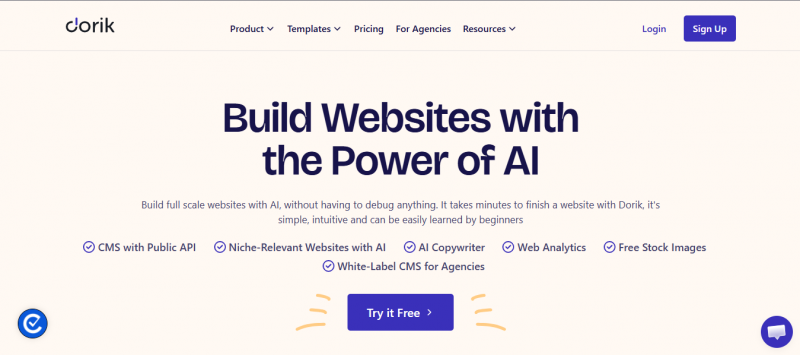
Best overall AI landing page generator for simplicity
Dorik AI has quickly become one of the most talked about tools in the AI landing page space, largely because of how frictionless the experience feels.
The platform focuses heavily on simplicity without sacrificing output quality. Users can generate full landing pages by answering a few guided prompts, after which the AI produces structured layouts that are ready for customization. Reviews consistently highlight its strong balance between automation and user control.
One of Dorik’s biggest strengths is that it does not overwhelm beginners. The workflow feels clean, and the editor allows you to adjust spacing, fonts, colors, and content blocks easily after generation. For many small businesses and creators, this balance hits the sweet spot between speed and flexibility.
Dorik is especially well suited for founders and marketers who want:
- Fast AI generated pages
- Clean drag and drop editing
- Simple customization
- Lightweight marketing pages
Verdict: A strong default choice for most users who want speed without complexity.
MailerLite
Best for email marketing driven landing pages
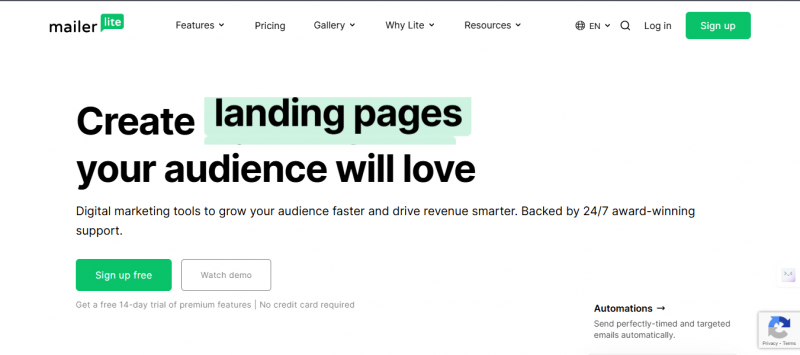
MailerLite takes a slightly different approach by tightly integrating landing pages with email marketing workflows. This makes it particularly attractive for creators and businesses focused on lead capture funnels.
The AI assisted builder can generate multiple page variations after you provide design directions and brand inputs. From there, users can customize the layout using a drag and drop editor and add elements such as countdown timers, testimonials, and forms.
Where MailerLite stands out is lifecycle marketing. Instead of treating the landing page as an isolated asset, the platform connects it directly to email automation, list building, and digital product flows.
It tends to work best when your priorities include:
- Lead magnets
- Newsletter growth
- Email funnel integration
- Simple marketing pages
Verdict: Ideal for creators whose landing pages feed directly into email sequences.
Sitekick AI
Best for ultra fast AI page generation
If pure speed is your top priority, Sitekick AI deserves serious attention.
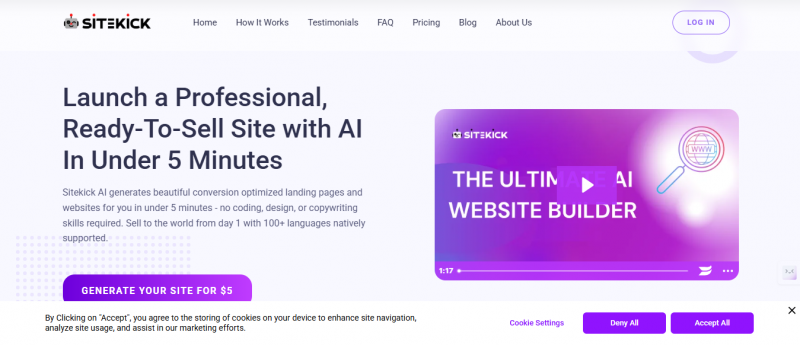
The platform is designed to generate conversion optimized landing pages in minutes with minimal user input. Its AI is trained on thousands of high converting pages and aims to handle design, copy, and layout automatically.
This makes Sitekick particularly appealing for non technical founders who want something live quickly. The system can also generate images and supports multiple languages, which helps teams launching across different markets.
However, speed comes with trade offs. Some reviewers note that while Sitekick is extremely easy to use, its initial designs may feel less refined than competitors and sometimes benefit from manual tweaking.
Sitekick works best for:
- Rapid MVP launches
- Service business pages
- Simple sales pages
- Non technical users
Verdict: One of the fastest ways to go from idea to live page.
Landingi
Best for conversion focused marketers
Landingi positions itself more toward performance driven teams rather than pure beginners.
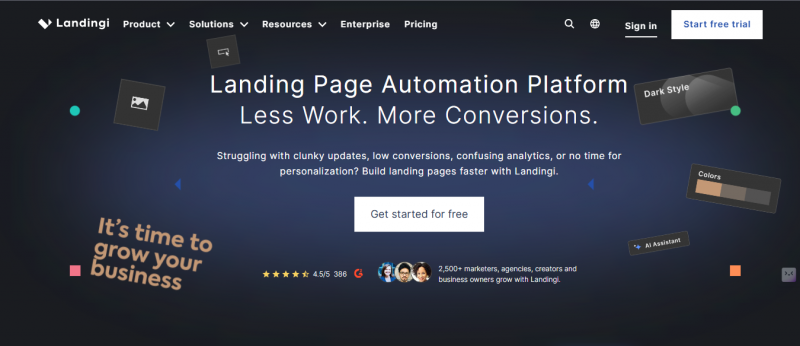
The platform combines a user friendly editor with AI powered suggestions for SEO, content structure, and conversion elements. Its system analyzes layout, images, and copy placement to help improve engagement and conversion rates.
What makes Landingi particularly attractive is its campaign depth. It supports funnel building, A/B testing, and optimization workflows that serious marketers rely on when scaling paid traffic.
This is less about quick one page launches and more about systematic conversion improvement.
Landingi is strongest when used for:
- Paid traffic funnels
- Conversion optimization
- Campaign landing pages
- Marketing teams
Verdict: A better fit for growth marketers than casual creators.
GetResponse
Best for full marketing ecosystem integration
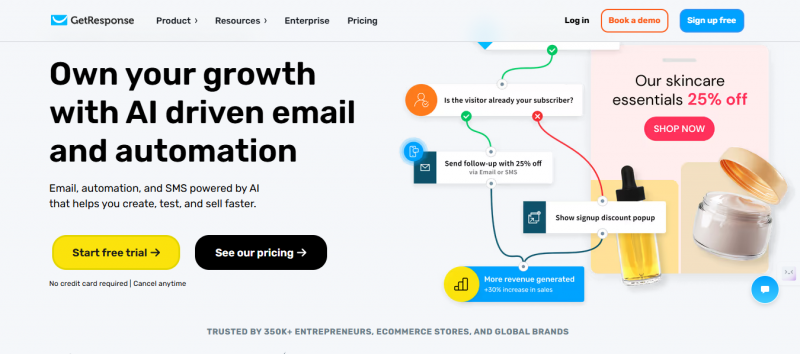
GetResponse sits at the intersection of landing pages and broader marketing automation. While it is not purely an AI landing page tool, its builder becomes powerful when combined with its automation features.
The platform allows teams to build pages that connect directly into email sequences, analytics, and customer journey workflows. This makes it particularly useful for businesses that want their landing pages embedded inside a larger funnel system.
However, the feature depth can feel overwhelming for beginners. It is better suited for teams that already understand funnel architecture and want tighter automation.
GetResponse is most useful for:
- Automated marketing funnels
- Webinar funnels
- Email driven campaigns
- Growth teams
Verdict: Best for teams thinking beyond a single landing page.
PageGPT
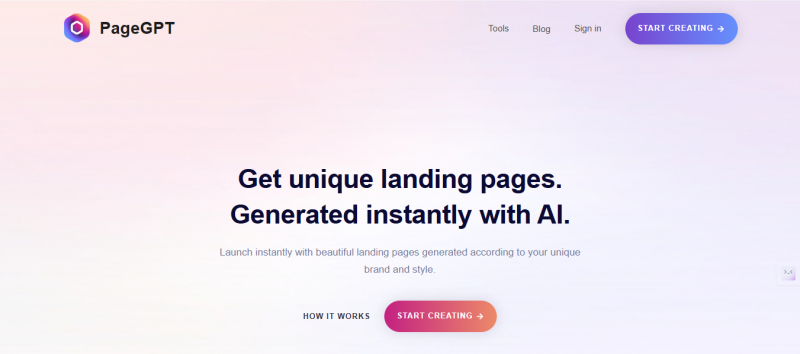
Best for AI copy driven landing pages
PageGPT focuses heavily on one area many builders still struggle with: persuasive copy.
The platform emphasizes AI generated messaging that aligns with brand voice and conversion goals. It is designed to function almost like a built in copywriter and designer working together to produce landing pages quickly.
This makes it especially appealing for founders who know their offer but struggle to articulate it clearly on the page. While its design flexibility is somewhat narrower than full visual builders, its messaging quality often compensates.
PageGPT tends to perform best for:
- Sales page copy generation
- Offer validation pages
- Fast copy first builds
- Early stage startups
Verdict: Particularly useful when messaging clarity is your bottleneck.
How to Choose the Right Tool in 2026
The biggest mistake buyers still make is asking, “Which AI landing page builder is best?”
The better question is, “What part of my funnel is currently weakest?”
- If you need the fastest path to a live page, Sitekick usually delivers.
- If your focus is email list growth, MailerLite fits naturally.
- If you want balanced simplicity and flexibility, Dorik is often the safest pick.
- If conversion optimization matters most, Landingi brings deeper marketing tools.
- If your funnel is automation heavy, GetResponse becomes more compelling.
- If your copy is the weak link, PageGPT deserves attention.
AI landing page builders are no longer experimental toys. They are rapidly becoming the default way modern teams launch campaigns.
Final Thoughts
Landing page creation has quietly undergone one of the biggest productivity shifts in digital marketing.
What once required designers, developers, and copywriters working in sequence can now be handled by a single AI assisted workflow. Pages that previously took days can now be generated, tested, and iterated within hours. That speed advantage compounds quickly, especially for teams running paid traffic or rapid product launches.
But the smartest operators in 2026 are not choosing tools based on hype or feature lists alone. They are identifying where friction exists in their funnel and selecting the platform that removes it fastest.
Because in today’s market, the winning landing page is rarely the one that took the longest to build.
It is the one that reached the market first and improved the fastest.
Post Comment
Be the first to post comment!