Let’s be honest for a second.
Most people do not wake up excited to set up lights, fix their hair, rehearse lines, and record themselves talking for the forty-seventh time. Video production is powerful, but it is also slow, expensive, and surprisingly exhausting.
That is exactly why AI avatar tools are exploding in 2026.
What started a few years ago as slightly awkward digital talking heads has evolved into remarkably realistic virtual presenters that can deliver polished videos at scale. Today’s leading platforms can generate lifelike lip sync, natural facial motion, and multilingual output that would have required full production teams not long ago.
Businesses are already using AI avatars to dramatically reduce filming costs while maintaining consistent messaging across global teams. Marketing departments are scaling content faster. Learning and development teams are automating training videos. Even solo creators are quietly replacing camera time with AI presenters.
But here is the part most “top tools” lists skip.
Different avatar platforms dominate very different use cases.
Some are engineered for enterprise training environments. Others are optimized for fast marketing videos. And a few are clearly built for people who would rather do almost anything else than sit in front of a camera. No judgment.
So instead of hype, here is a grounded, slightly entertaining breakdown of the best AI avatar generators in 2026 and where each one actually fits.
Before jumping into the tools themselves, it is important to understand what separates a professional-grade avatar platform from something that still feels experimental.
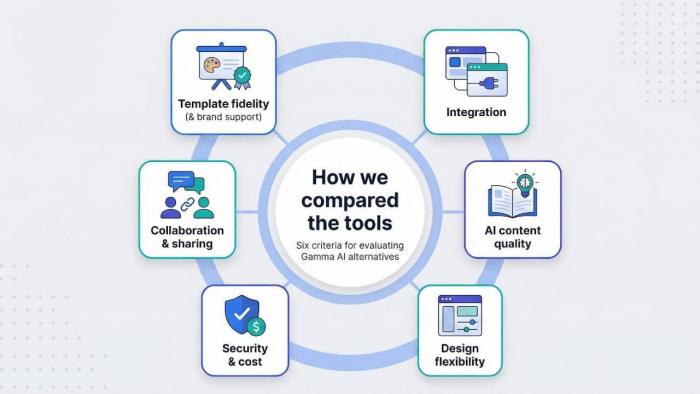
Serious buyers in 2026 typically evaluate AI avatar tools across several core factors. Realism is still the first filter, but it is no longer the only one. Teams also care deeply about scalability, language coverage, and workflow integration.
The most competitive platforms today are judged primarily on:
Modern tools such as HeyGen and Synthesia have raised the bar significantly, particularly in lip-sync precision. As a result, weaker avatars are becoming much easier to spot, and expectations across the market have risen quickly.
Best for realistic talking photo avatars
If the AI avatar space had a dedicated “make photos talk” specialist, D-ID would be wearing the lab coat and running the experiment.
D-ID focuses heavily on animating still images into convincing talking presenters. Rather than building fully synthetic characters from scratch, the platform excels at bringing real human photos to life. This approach gives it a unique advantage in scenarios where personalization and realism matter more than flashy avatar libraries.
The workflow is straightforward but surprisingly powerful. Users upload a face, add a script, and the system generates natural facial motion with synchronized speech. When used well, the output can feel impressively lifelike, especially for short-form presenter content.
Where D-ID becomes particularly valuable is in scalable personalization. Sales teams can create customized outreach videos. Product teams can generate AI presenters. Enterprises can deploy conversational digital agents without scheduling video shoots.
D-ID performs especially well in:
However, it is not trying to be the most cinematic avatar platform on the market. Creative flexibility is more limited compared to some competitors, and the library of prebuilt personalities is smaller.
Verdict: If your goal is making real photos speak convincingly, D-ID remains one of the strongest choices available.
Best for enterprise training and corporate video
If D-ID is the specialist, Synthesia is the corporate heavyweight.
Synthesia has built its reputation by focusing squarely on reliability, compliance, and large-scale business deployment. While some platforms chase viral content workflows, Synthesia is optimized for structured, repeatable video production inside organizations.
One of its biggest advantages is global reach. The platform supports video creation in more than 140 languages and accents, making it particularly attractive for multinational teams that need consistent messaging across regions.
Enterprises tend to favor Synthesia because it solves a very specific pain point: producing large volumes of professional training content without repeatedly filming presenters.
It is commonly used for:
The avatars themselves are polished and professional rather than flashy. That is intentional. Corporate teams typically value consistency and clarity over stylistic experimentation.
Key strengths include:
The main trade-off is creative flexibility. Compared to marketing-focused tools, Synthesia can feel more structured and less dynamic.
Verdict: A safe, scalable choice for organizations that prioritize reliability over flash.
Best for marketing teams and creator workflows
If Synthesia is the corporate suit, HeyGen is the startup founder who actually enjoys using new tools.
HeyGen has gained significant traction because it balances realism with speed and usability. The platform is designed for marketers, agencies, and creators who want high-quality avatar videos without complex production overhead.
Its interface is notably creator-friendly. Users can generate spokesperson videos, multilingual campaigns, and social content quickly, which makes it especially appealing for fast-moving marketing teams.
What stands out most about HeyGen is its versatility. It works well across both business and creator use cases, which is why many reviewers consider it one of the strongest all-around avatar platforms currently available.
HeyGen is particularly strong for:
Notable advantages include:
Its enterprise controls are slightly less mature than Synthesia’s, and heavy usage can require careful pricing management.
Verdict: One of the most balanced and practical avatar tools in 2026.
Best for broadcast-style digital presenters
DeepBrain AI occupies a slightly different niche. Its avatars are designed to look and behave more like professional news presenters than social media personalities.
This makes the platform particularly attractive for organizations that want formal, studio-style communication. Financial briefings, corporate announcements, and customer updates are common use cases.
The visual style tends to be more polished and restrained, which works well in professional environments but may feel less dynamic for marketing teams.
DeepBrain performs best in scenarios such as:
Strengths include:
Its creative range is narrower than some competitors, and it is clearly optimized for business communication rather than viral content.
Verdict: Excellent for organizations that want a polished broadcast look.
Best for e-learning and instructional content
Colossyan has built a quiet but strong reputation in the learning and development space. While it does not always dominate headline comparisons, it performs extremely well in structured educational workflows.
The platform is particularly suited for companies producing large volumes of training and instructional content. Features like SCORM compatibility and interactive video support make it appealing to L&D teams that need more than just a talking head.
Colossyan is commonly used for:
Its strengths include:
It is less optimized for marketing creativity and has a smaller ecosystem than some larger competitors.
Verdict: A strong, focused choice for learning teams.
Best for high-volume avatar production
AI Studios is built for scale.
Some companies do not need one perfect video. They need hundreds of consistent ones every month. That is exactly where AI Studios becomes valuable.
The platform emphasizes repeatable production pipelines and batch video generation, making it useful for enterprises running large content operations.
It works best for:
Advantages include:
The interface can feel utilitarian, and creative flexibility is more limited compared to creator-focused tools.
Verdict: Built for operational scale rather than creative experimentation.
Best for social media creators
InVideo brings avatar technology into the social content ecosystem, making it particularly attractive for creators who prioritize speed and simplicity.
The platform integrates avatar generation into a broader video creation workflow, which lowers the barrier to entry for beginners. It is especially useful for YouTube creators, short-form video producers, and marketing teams that need fast turnaround.
InVideo works well for:
Key benefits include:
Avatar realism is slightly behind the top enterprise tools, but for many creators the speed advantage outweighs that gap.
Verdict: A strong entry point for creator-led workflows.
AI avatars are no longer experimental technology. In 2026, they are firmly production-ready and increasingly mainstream.
Organizations are adopting them to reduce filming costs, localize content globally, accelerate marketing output, and automate training workflows. The tools themselves are improving rapidly, particularly in lip sync and natural facial motion.
The smartest approach is not asking which platform is universally best. It is identifying which tool fits your specific workflow.
Quick cheat sheet:
Choose based on use case, not hype.
Because in 2026, your next video presenter might not exist in real life.
And the funny part is… they never ask for retakes.
Be the first to post comment!