Healthcare centers have always been places where science meets urgency. Everyone is on the run, or at least at a high pace. Doctors move quickly. Nurses juggle between patient beds. Patients arrive with a frenetic speed and symptoms that sometimes shout, but often only whisper. And over the last couple of years, something new has walked into healthcare centers. It doesn’t drink coffee during long shifts. It doesn’t wear a white coat or scrubs. But it never forgets a lesson learned. Artificial Intelligence is the new actor in the building, and while some have only recently heard about it, it has been preparing for this role for quite some time.
When most hear about AI in healthcare, they picture the dramatic science-fiction script where robots replace doctors. But the truth is quite different. AI is handling more subtle tasks in the healthcare sector. At the moment, it acts as a quiet assistant that handles things behind the scenes, an analytical specialist that processes data faster than a human brain. Healthcare systems around the world are beginning to approach the idea of using AI with enthusiasm as they realize medicine is a field that generates huge chunks of data (medication interactions, genetic information, imaging scans, lab results, patient histories, and many similar ones. AI can recognize patterns and draw conclusions, enabling healthcare professionals to improve their performance and deliver better services.
Let’s explore the various ways AI is reshaping modern healthcare.
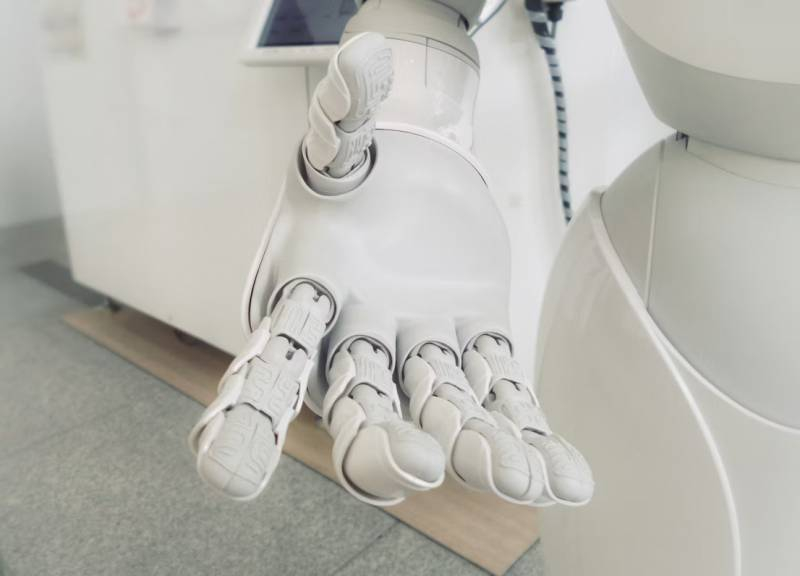
Image source https://unsplash.com/photos/closeup-photo-of-white-robot-arm-jIBMSMs4_kA
AI Plays An Active Role In Medical Negligence Prevention
It’s no surprise that healthcare professionals are exposed to increased amounts of stress and pressure. They have to care for patients while working long hours, juggling high patient loads, and performing in environments that facilitate human error. And when they make a mistake, the consequences can be devastating because they affect lives. AI has an unexpected role in this context because it can reduce the risk of medical negligence. Overlooked symptoms, misinterpreted information, or missed data can lead to medical negligence. When people fall victims to medical negligence, they have the right to claim compensation and learn how are nhs negligence payouts calculated to evaluate the amount of reparation they can get. But in a world where artificial intelligence is used widely in healthcare, the systems can cross-check the diagnoses, patient histories, and medication dosages. It can work as a second layer of verification that protects both the patients and doctors.
AI Powers Faster Diagnosis
IT’s exciting to see how artificial intelligence is used to diagnose health issues. Tests that help diagnose (MRIs, X-rays, CT scans) produce large amounts of visual data, which are later interpreted by radiologists. These specialists spend years learning how to interpret tiny changes in tissue, structural abnormalities, and shadows. AI specialized in medical imaging can assist them in the process, so they can make better assumptions. AI won’t replace the skills and knowledge of an experienced radiologist, but can provide them with an extra pair of eyes. The algorithm is designed to look for patterns that resemble symptoms of particular diseases, from fractures to tumors and early indicators of medical conditions like pneumonia. AI systems can identify the suspicious areas a human specialist might miss during a busy shift. Speed is vital with some diagnoses. And generally, when a health issue is detected early, treatment is more likely to work and is also cheaper.
The real promise with AI in diagnosis is to catch problems in the early stages.
AI Enables Personalized Treatment
Traditional medicine relies on standard protocols. When a patient is diagnosed with a condition, the doctor prescribes a treatment proven to work for most people suffering from the same issue. It’s not wrong to use this approach. It saved countless lives. But it doesn’t leave room for individual biological particularities.
AI can help healthcare move towards a more personalized approach.
An AI agent can analyze patient data, from their genetic profile to their medical history and lifestyle factors, and can help the doctor predict whether they will respond to the expected treatment or might need an alternative solution. A hospital sees dozens of patients each day with the same diagnosis, but with very different personal particulars. AI-driven analysis can help the doctors figure out what treatment path is more likely to succeed for each of them. Medicine becomes precise.
AI Helps Hospitals Predict Problems Before They Happen
A hospital is an ever-changing environment with patients being moved from one department to another, their vital signs changing, and doctors and nurses handling dozens of cases simultaneously. Artificial intelligence can work similarly to Big Brother, watching everything in real time, identifying subtle warning signs, and predicting possible outcomes. When a system is permanently tracking data like small shifts in oxygen levels, heart rate, and blood pressure, it can predict that the patient might develop complications. Human doctors can act on the warnings they receive from the AI to prevent issues or address them in the early stages.
AI promotes proactive care instead of reactive treatment.
AI Can Handle Administrative Work
AI can be used in most industries and sectors, so it powers transformation both inside hospital rooms and administrative departments. Administration consumed a large amount of healthcare resources. Only think about all the paperwork, management, insurance processing, and appointment scheduling a clinic (for example) must handle to function. AI can streamline most of the processes and systems behind a functioning healthcare facility. An automated scheduling app can improve the appointment system. A natural language processing system can transcribe the conversations held during consultations and procedures. Instead of focusing on the paperwork they have to fill out when consulting a patient, the doctor can focus their entire attention on the individual in front of them, and leave the AI agent to handle the documentation.
AI Powers A Quiet Revolution In Healthcare
It’s easy to spot the presence of artificial intelligence when stepping into a healthcare unit that has integrated it into its processes. There is no dramatic robot roaming the hallways, but the doctors can provide better care.
Post Comment
Be the first to post comment!