Artificial intelligence is no longer science fiction in professional football. In 2025 and early 2026, AI tools have been integrated into nearly every part of the NFL, from injury prevention and officiating to analytics and fan engagement. It is changing how teams prepare, how coaches strategize, and how viewers experience games. Fans who have read the NFL MVP choices for 2026 can see the influence of AI in the data that supports player performance projections, durability evaluations, and advanced statistics that feed into award discussions. Here’s a look at how AI is shaping the league today and the trends it could create in the near future.
AI and Player Health: Predicting and Preventing Injuries
One of the most concrete impacts of AI in the NFL is in player health. The league and teams are using a platform called “Digital Athlete,” which applies AI, machine learning, and computer vision to massive amounts of tracking data. During each week of games, this system captures about 6.8 million video frames and analyzes around 100 million positional data points for players on the field. During practices, it processes roughly 500 million data points per week, giving teams detailed insights into player movements and workloads before injury risk becomes critical.
This technology has already delivered measurable results. According to league data, the use of these AI systems has contributed to a 14 percent reduction in lower extremity practice injuries since 2023. AI also informed changes to game rules, such as a redesigned kickoff, which achieved higher return rates while improving safety.
Teams use AI injury alerts to adjust practice loads and playing time, helping preserve their stars for important stretches of the season. Data suggests that some teams now make multiple AI-driven substitutions per game to preserve player health, a trend that could grow as the technology improves.
Next Gen Stats: Advanced Performance Insights
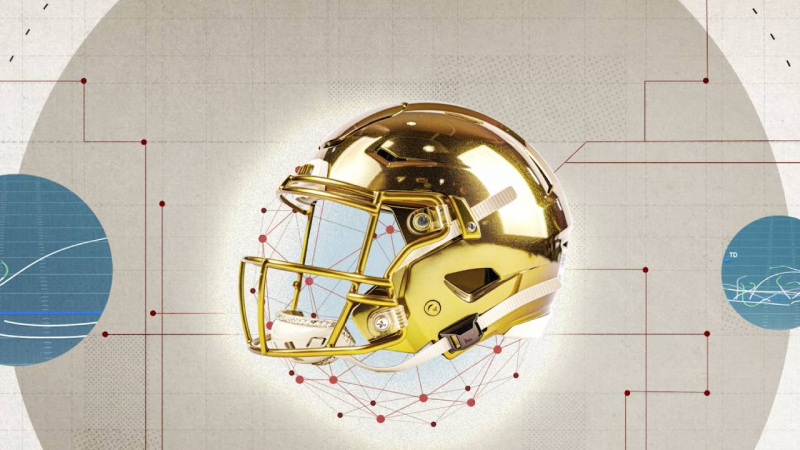
AI has turbocharged the NFL’s Next Gen Stats platform, a collaboration between the league, Amazon Web Services, and other partners that was built on player tracking technology. Next Gen Stats collects data using sensors and RFID tags in players’ shoulder pads and gear, creating a live stream of performance analytics during games. The system gathers more than 500 million data points each season and uses AI models to convert those raw inputs into meaningful performance metrics.
These insights go far beyond traditional statistics. Coaches and analysts can now see probabilities for tackle success, tendencies in defensive and offensive alignments, and detailed breakdowns of performance on every play. This breadth of information helps coaches identify patterns and adjust game plans in ways that would have been impossible with manual analysis alone.
AWS and NFL partners have also run open innovation challenges that improved injury prediction algorithms by up to 31 percent, demonstrating how machine learning models can enhance contact detection and risk analysis.
AI in Officiating and Measurement Technology
AI is even reshaping how games are officiated. In 2025, the league announced it would replace the traditional chain crews used to measure first downs with a camera-based system built by Sony called Hawk-Eye. This system uses six 8K cameras to optically track the football’s exact position and can deliver measurements to referees up to 40 seconds faster than manual methods, improving accuracy and pace of play.
By integrating camera data with AI models, the league can reduce human error and aid officials in real time. As these technologies mature, they may be used in more areas of officiating to help make calls on tight plays more consistently and efficiently.
AI in Coaching and Game Planning
Teams are using AI-powered tools to enhance game preparation and weekly planning. AI models can analyze past performances of opponents by scanning years of play data and identifying tendencies, creating predictive models of how teams will react in specific situations. These insights help coordinators decide on play calls, defensive adjustments, and scoring strategies with statistical backing rather than intuition alone.
Some teams also use AI to streamline scouting and draft preparation, analyzing a wide array of metrics from college play to predict NFL success. Clubs with advanced analytics departments, like the Philadelphia Eagles and San Francisco 49ers, are leveraging these tools to gain an edge in roster construction and situational play design.
Fan Engagement, Media and Broadcast Enhancements
AI is also transforming how fans experience games. Amazon Prime Video’s broadcasts increasingly incorporate AI features such as “Defensive Alerts,” which use machine learning to highlight blitzes, coverage vulnerabilities, and strategic opportunities in real time. This enriches the viewing experience and makes complex strategic elements easier to understand for casual fans.
Social media and highlight platforms also use AI to automatically create shareable clips, track fan sentiment, and provide real-time engagement metrics. Personalized content that reflects viewer preferences keeps fans more engaged and deepens their connection to teams and star players.
Future Trends: What’s Next?
As AI adoption accelerates, several trends are emerging:
- Predictive Performance Modeling: AI could help forecast player career trajectories, workload tolerance, and peak performance windows, giving teams a long-range planning tool.
- Integrated Health and Performance Dashboards: Future systems may combine biometric, imaging, and tracking data into unified dashboards that give a holistic view of player status.
- Enhanced Broadcast Personalization: Fans may see fully customized game streams that show only the players or plays they care about most or highlight AI-generated insights tailored to their preferences.
- Automated Officiating Support: As AI becomes more accurate and trusted, it may help referees make instant decisions on complex plays, reducing controversial calls.
AI is no longer a futuristic idea in the NFL. It is a central part of how the league protects players, analyzes performance, enhances officiating, and engages fans. With systems processing hundreds of millions of data points per week and predictive models improving injury outcomes and game strategy, AI is helping the league evolve in a data-driven world. As the technology continues to improve, fans and teams alike will see even more ways that artificial intelligence reshapes America’s most popular sport.
Post Comment
Be the first to post comment!