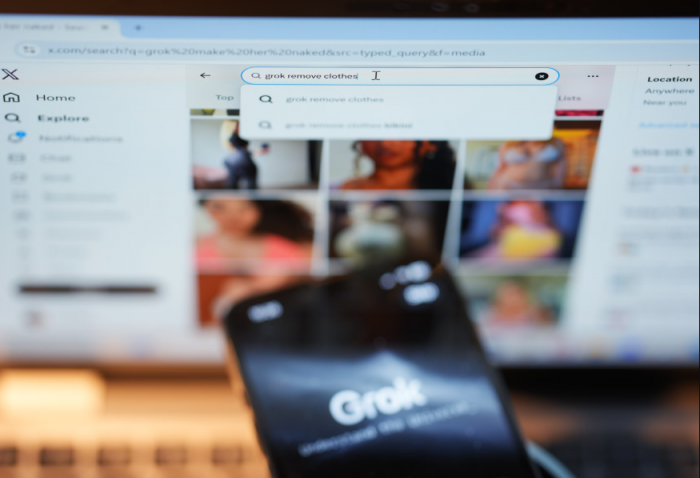
A recent ruling in the UK has brought renewed attention to how artificial intelligence tools are marketed to the public. An advertisement promoting an AI-powered editing app has been banned after regulators concluded that it implied users could digitally remove a woman’s clothing, raising concerns around consent, privacy, and harmful representation.
The decision highlights the growing scrutiny around AI tools, particularly those that can be misused to manipulate images in ways that affect personal dignity and safety.
The advert positioned the app as a powerful editing tool capable of removing “anything” from images and videos. While the messaging itself appeared broad, the accompanying visuals and framing led regulators to interpret the claim differently.
According to the ruling, the way the feature was presented suggested the possibility of removing a woman’s clothing from an image. This implication, even if not explicitly stated, was considered significant enough to shape how viewers understood the product’s capabilities.
The regulator concluded that the advertisement created a context where the woman featured was presented in a sexualized manner, rather than as a neutral subject of editing.
The UK’s Advertising Standards Authority determined that the advertisement breached multiple standards related to harm and offense. The ruling emphasized that the content was sexually objectifying and likely to cause serious concern among viewers.
Beyond the issue of representation, the regulator also focused on the broader implications of the messaging. Suggesting that AI tools could be used to remove clothing from individuals touches directly on ongoing concerns around deepfake abuse and non-consensual image manipulation.
The decision reflects a wider regulatory stance that AI technologies should not be promoted in ways that normalize or trivialize misuse, especially in areas involving personal privacy and consent.
Following the investigation, the advertisement has been banned from appearing in its current form. The company behind the app has also been instructed to avoid similar messaging in future campaigns.
This means that any future promotion of the tool must ensure that its capabilities are presented clearly and responsibly, without implying harmful or unethical uses.
This case is part of a larger conversation about how AI-powered editing tools are evolving and how they are perceived by the public. As these tools become more advanced, the line between creative editing and harmful manipulation becomes increasingly important.
Regulators are beginning to focus not only on how these tools are used, but also on how they are marketed. Even indirect suggestions of misuse can be enough to trigger action if they raise concerns around safety or ethics.
The issue is particularly sensitive in the context of deepfakes, where similar technologies have already been used to create non-consensual and misleading content.
The ban serves as a clear signal to companies developing and marketing AI tools. Capabilities that involve altering or manipulating images must be communicated carefully, especially when they could be interpreted in ways that raise ethical concerns.
It also reflects a shift toward stricter oversight of AI-related advertising. As public awareness grows, regulators are more likely to intervene when messaging crosses into areas that could promote misuse.
For AI companies, the challenge is no longer just building powerful tools, but ensuring those tools are presented in a way that aligns with social and regulatory expectations.
The banned advert may appear like a single incident, but it represents a broader turning point. As AI tools become more capable, the responsibility around how they are framed becomes just as important as how they function.
This case reinforces the idea that innovation in AI cannot be separated from accountability. How these tools are introduced to users will increasingly shape how they are regulated, adopted, and trusted.
Be the first to post comment!