Most “best AI answer generator” lists online are built backward. They start with whatever tool has the best affiliate payout, sprinkle in a few buzzwords, and bury the real engines behind modern AI. If you strip away the marketing layers, a very different picture emerges, one where only a handful of systems actually shape the answers people see across the internet.
This article focuses on those systems. Not the wrappers. Not the browser extensions. Not the tools trying to ride the AI wave.
Only the core answer-generation models—the ones that define the accuracy, depth, speed, and intelligence of nearly every major AI product today.
These are the models enterprises benchmark, the ones researchers evaluate, and the ones that steer the direction of the entire industry.
The Eight AI Answer Generators That Actually Matter
The following eight models form the backbone of the global AI ecosystem. They are not “apps”—they are full-scale reasoning engines used by governments, universities, Fortune 500 companies, and consumer tools across the world.
1. OpenAI GPT-4o and GPT-5
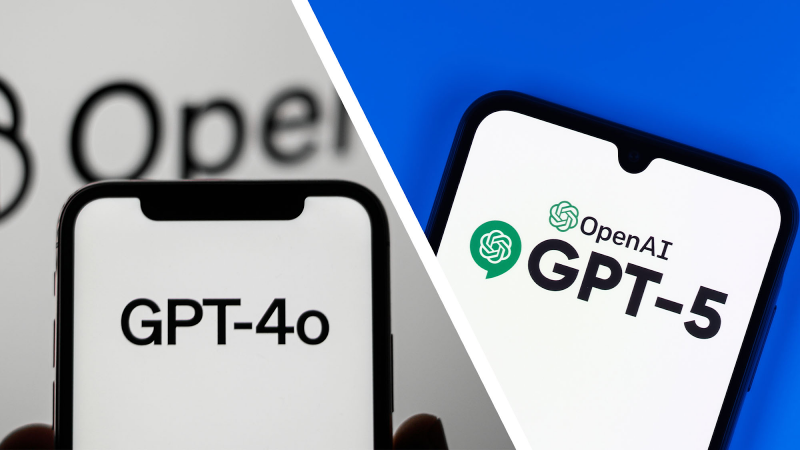
OpenAI’s flagship models remain the most widely deployed answer generators globally, powering everything from consumer chatbots to enterprise reasoning systems. Their strength lies in their balance: broad general knowledge, strong reasoning, and highly contextualized natural language responses. The multimodal abilities built into GPT-4o, and extended further in GPT-5, have made these models the default choice for organizations that need dependable, general-purpose intelligence.
2. Google Gemini 1.5 and 2.0
Gemini’s appeal isn’t just in its raw reasoning benchmarks but in how deeply it embeds into everyday tools—Docs, Gmail, Search, Workspace, and even Android. Gemini models excel at long-context tasks, technical explanations, and data-rich responses that benefit from Google’s natural reach across global information. For people already living inside Google’s ecosystem, Gemini offers a frictionless, always-available answer engine.
3. Anthropic Claude 3
Claude has carved out a space of its own by specializing in thoughtful, controlled, and context-sensitive responses. It handles long documents remarkably well and maintains clarity even when dealing with nuance or subjective interpretations. Claude’s training philosophy emphasizes model safety and instruction accuracy, which makes it a strong fit for users who want consistent reasoning over flashy creativity.
4. Meta LLaMA 3
LLaMA 3 is the open-source backbone behind hundreds of independent AI projects. While not always as polished as proprietary models, its significance is enormous: it democratizes access to advanced answer generation, enabling anyone—from startups to individual developers—to build their own AI systems. LLaMA 3’s flexibility, modifiability, and rapid community-driven evolution keep it central to the modern AI landscape.
5. Microsoft Copilot Models

Copilot isn't a single model but a hybrid system drawing from multiple model backends—including OpenAI models and Microsoft’s in-house tuning layers. It is designed for work-specific answers: spreadsheets, emails, documents, meeting summaries, workflow instructions, and business reasoning inside the Microsoft 365 ecosystem. For workplace queries, Copilot is often the fastest way to get structured, actionable responses.
6. Perplexity Engine (Fusion Model Architecture)
The Perplexity Engine doesn’t just generate answers—it verifies them. Its fusion architecture blends large models with live retrieval and ranked sources. This leads to responses that are not only fast but grounded in citation-backed evidence. Perplexity has become the go-to engine for users who care about accuracy and traceability rather than pure generative creativity.
7. Amazon Q
Amazon Q is primarily an enterprise answer generator designed to integrate deeply into work systems, codebases, documentation, internal policies, and organizational data. Instead of being a general-purpose chatbot, Q specializes in answering domain-specific questions within a company’s private knowledge stack. Its value lies in precision rather than broad conversational range.
8. xAI Grok
Grok has developed a reputation for speed and directness. Trained on massive real-time datasets, it often produces answers that feel more updated and less sanitized than those from other models. Grok’s strength is breadth of coverage and immediacy, which makes it particularly appealing for users who want fast, candid responses with clear reasoning.
A Simple Comparison of the Top 8 Answer Generators
A concise table—not a bloated one—summarizing the core distinctions:
| Model | Core Strength | Ideal User Type |
| GPT-4o / GPT-5 | Balanced reasoning + creativity | Individuals and teams needing versatile intelligence |
| Gemini 1.5 / 2.0 | Deep ecosystem integration + long context | Google Workspace users and researchers |
| Claude 3 | Nuance, long-form clarity, safe reasoning | Writers, analysts, and academic users |
| LLaMA 3 | Open-source flexibility | Developers and custom AI builders |
| Microsoft Copilot Models | Work-focused task execution | Office 365 and enterprise teams |
| Perplexity Engine | Verified responses with citations | Researchers and fact-driven users |
| Amazon Q | Enterprise knowledge answering | Large organizations with private data systems |
| Grok | Real-time awareness and fast responses | Users wanting immediacy and directness |
This table is intentionally compact—just enough contrast to help readers choose the right direction without overwhelming them.
So Which AI Answer Generator Should You Use?
Not one of these systems is universally “best,” and that’s precisely why this comparison matters. Each model reflects a different philosophy of intelligence, and your ideal choice depends on what you value most:
● If you want the most balanced general-purpose reasoning, GPT-4o or GPT-5 remain unmatched.
● If you work inside the Google ecosystem, Gemini offers a more seamless daily experience.
● If you need long-context clarity, Claude 3 is hard to beat.
● If you want to build or customize AI, LLaMA 3 is the backbone.
● If your work lives in Microsoft, Copilot models are the natural choice.
● If you want citation-backed answers, Perplexity stands apart.
● If your company needs internal knowledge answers, Amazon Q is built for that.
● If you prefer up-to-the-minute responses, Grok provides a different flavor entirely.
The real takeaway is simple:
These eight systems are the foundation of intelligent answering in 2025. Every other tool you see online is built on top of them.
Post Comment
Be the first to post comment!