Customer relationship management software has become the backbone of modern sales and marketing teams. Companies rely on CRM platforms to track leads, manage customer interactions, automate follow-ups, and analyze revenue pipelines. For many years, Salesforce has been one of the most widely used CRM systems in the world.
Salesforce offers powerful tools for sales automation, customer service, analytics, and marketing workflows. However, many companies eventually begin exploring alternatives. Some teams find Salesforce too complex to configure, while others consider the pricing expensive as their contact database grows. Smaller organizations may also prefer CRM platforms that are easier to deploy and maintain.
Because of this demand, the CRM ecosystem has expanded significantly. A number of platforms now offer simpler interfaces, stronger automation tools, or pricing models that better suit growing businesses.
Before diving into individual tools, it helps to look at how the most popular Salesforce alternatives compare at a high level.
Quick Comparison of Salesforce Alternatives
| CRM Platform | Best For | Core Strength | Typical Users |
| HubSpot CRM | Marketing-focused teams | Sales + marketing automation | Startups, growth teams |
| Zoho CRM | Affordable CRM system | Customization and integrations | SMBs |
| Pipedrive | Sales pipeline management | Visual deal tracking | Sales teams |
| Monday CRM | Workflow management | Flexible dashboards | Cross-department teams |
| Freshsales | Communication driven sales | Built-in calling tools | Sales teams |
| Creatio | Business process automation | Low-code customization | Enterprise teams |
Each of these tools addresses a different weakness that companies often encounter with Salesforce.
How I Evaluated Salesforce Alternatives
Instead of comparing feature lists alone, the platforms were tested using several typical CRM tasks.
• managing a sales pipeline
• tracking leads and customer data
• creating automation workflows
• generating reports and analytics
The goal was to understand how each platform performs in everyday use rather than simply comparing marketing claims.
The results revealed clear differences between the tools.
| Platform | Ease of Use | Automation | Customization | My Rating |
| HubSpot CRM | High | High | Medium | 9.1 / 10 |
| Zoho CRM | Medium | High | High | 8.7 / 10 |
| Pipedrive | High | Medium | Medium | 8.6 / 10 |
| Monday CRM | Medium | Medium | High | 8.4 / 10 |
| Freshsales | Medium | High | Medium | 8.5 / 10 |
| Creatio | Medium | Very High | Very High | 8.8 / 10 |
What stood out during testing is that each platform emphasizes a different CRM workflow rather than competing directly on identical features.
HubSpot CRM
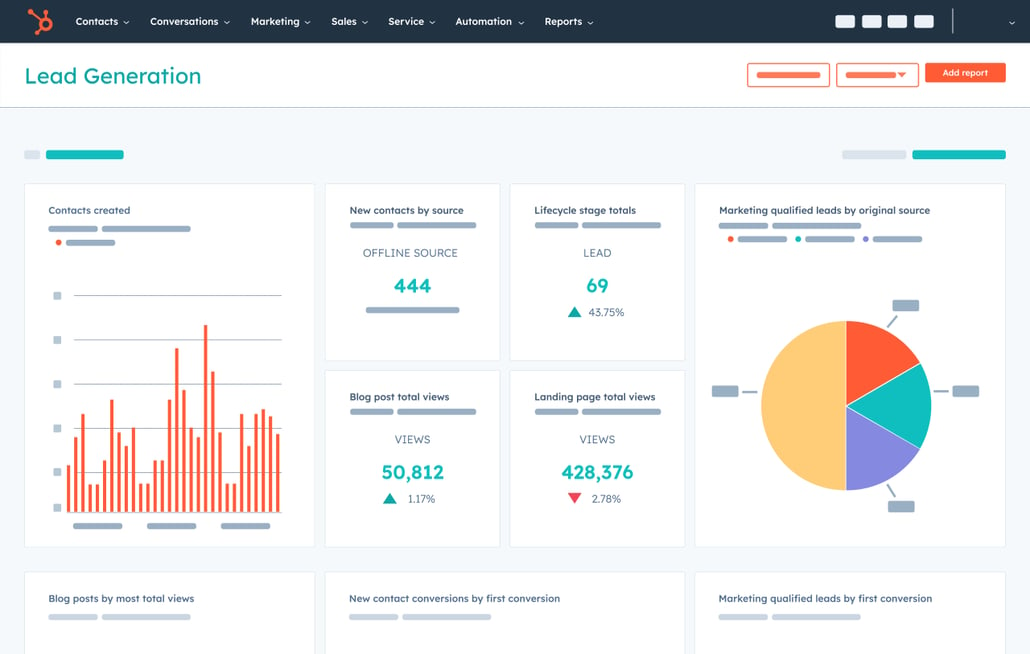
HubSpot is often considered the most accessible alternative to Salesforce. The platform combines CRM functionality with marketing automation, email campaigns, and customer support tools.
The biggest advantage of HubSpot is its usability. Many CRM systems require significant setup before they become useful. HubSpot, on the other hand, provides a clean interface where teams can start managing contacts and deals immediately.
Another reason businesses adopt HubSpot is its free CRM tier. Companies can manage contacts, track deals, and use basic automation tools without paying for the platform.
HubSpot works particularly well for companies that want to combine marketing and sales workflows inside a single system.
Zoho CRM
Zoho CRM is widely known for offering strong functionality at a lower price point compared with many enterprise CRM systems.
The platform includes features such as sales automation, workflow rules, analytics dashboards, and AI-powered sales insights. Zoho also connects with a larger ecosystem of business tools including accounting software, marketing platforms, and help desk systems.
During testing, Zoho stood out for its customization capabilities. Businesses can modify modules, dashboards, and automation rules to match their internal processes.
For companies that want enterprise-level flexibility without enterprise pricing, Zoho CRM often becomes a strong candidate.
Pipedrive
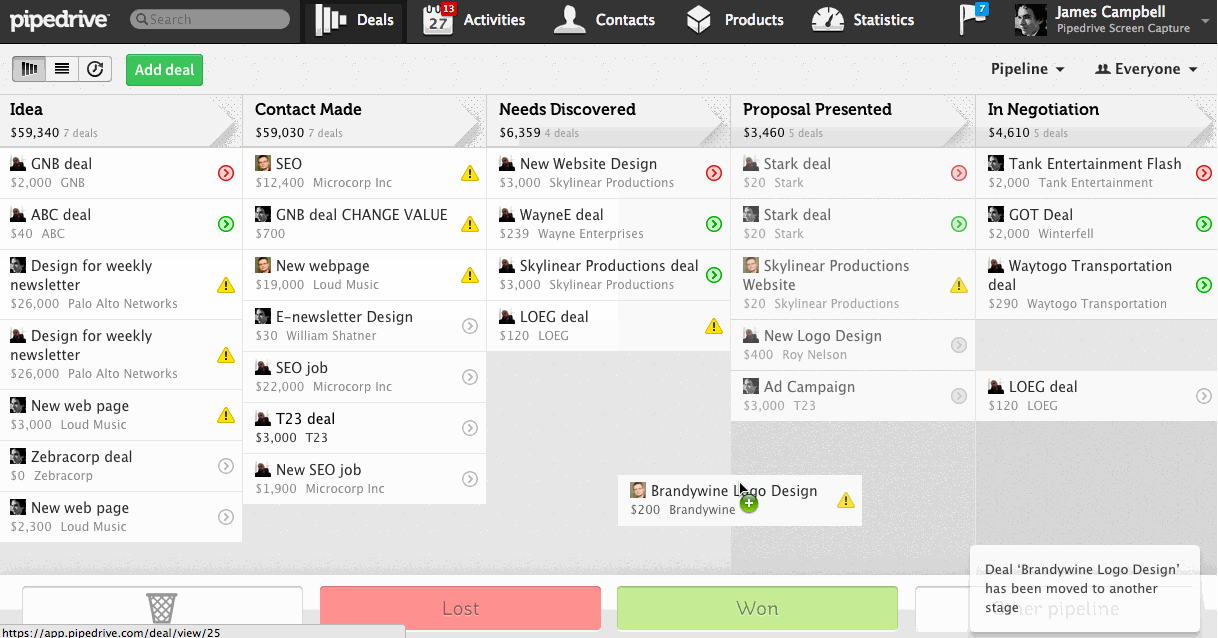
Pipedrive approaches CRM from a sales pipeline perspective. Instead of overwhelming users with dashboards and automation tools, the platform focuses on helping sales teams track deals visually.
The interface revolves around a drag-and-drop pipeline where each opportunity moves through stages such as contact, proposal, and negotiation.
During testing, this approach made it easy to track deal progress and identify stalled opportunities. Sales managers can quickly see which deals need attention and where revenue opportunities are developing.
Because of this design philosophy, Pipedrive is frequently adopted by companies that want a CRM specifically designed for sales teams.
Monday CRM
Monday CRM is built on top of the broader Monday work management platform. Instead of focusing only on sales activities, the tool integrates CRM features into a flexible project management environment.
Teams can create custom dashboards to track leads, manage contacts, and coordinate sales activities. Automation rules allow actions such as lead assignment or task notifications to occur automatically.
The strength of Monday CRM lies in flexibility. Organizations that manage complex workflows involving sales, marketing, and project teams often find the platform easier to adapt to their internal processes.
Freshsales

Freshsales is part of the Freshworks ecosystem and focuses heavily on sales communication tools.
Unlike many CRM systems that require external integrations, Freshsales includes built-in calling and email tracking features. Sales teams can manage conversations with prospects directly within the platform.
During testing, the built-in communication tools made the platform particularly useful for teams that rely heavily on outreach activities.
The automation system also allows companies to assign leads, schedule follow-ups, and update deal stages automatically.
Creatio

Creatio is designed for organizations that require advanced business process automation.
The platform uses low-code tools that allow teams to design workflows visually rather than relying on complex coding. This makes it easier to build custom processes for sales pipelines, customer onboarding, or lead qualification.
During testing, Creatio stood out for its flexibility. Businesses can design highly customized CRM systems without the complexity typically associated with enterprise platforms.
Because of these capabilities, Creatio is often used by companies that require deep process automation across departments.
Pricing Comparison
Pricing is one of the main reasons companies explore Salesforce alternatives.
| CRM Tool | Entry Pricing | Free Plan | Best Fit |
| HubSpot CRM | Free / paid tiers | Yes | Startups |
| Zoho CRM | Affordable monthly plans | Limited | SMBs |
| Pipedrive | Mid-range pricing | No | Sales teams |
| Monday CRM | Mid-range pricing | Trial available | Workflow teams |
| Freshsales | Mid-range pricing | Trial available | Sales teams |
| Creatio | Enterprise pricing | No | Large organizations |
Salesforce often becomes expensive as teams add users and automation features. Many alternatives offer pricing structures that are easier for growing companies to manage.
My Experience Comparing These CRM Tools
After exploring several CRM platforms, the biggest differences appear when using them in everyday workflows.
HubSpot and Pipedrive feel noticeably easier to start using. Their interfaces guide users through typical sales activities such as managing contacts, tracking deals, and scheduling follow-ups.
Zoho and Creatio provide deeper customization options, but the additional flexibility requires more setup. Teams that need specialized workflows may appreciate this control, while smaller organizations might prefer simpler systems.
One thing that becomes clear quickly is that the best CRM is not necessarily the one with the most features. Instead, the most effective platform is usually the one that aligns with how your sales team actually works.
Choosing the Right Salesforce Alternative
Selecting the right CRM platform depends on the priorities of your organization.
- Companies looking for a marketing and sales platform often choose HubSpot. Businesses seeking affordability and customization frequently consider Zoho CRM.
- Sales teams that want clear pipeline visibility may prefer Pipedrive, while organizations managing complex workflows often benefit from Monday CRM or Creatio.
Understanding how your team manages customer relationships is the most important factor when selecting a CRM platform.
Final Verdict
Salesforce remains one of the most powerful CRM systems available, particularly for large enterprises that require deep customization and extensive integrations. However, the growing CRM ecosystem now provides alternatives that address specific business needs more effectively.
Platforms such as HubSpot, Zoho CRM, Pipedrive, Monday CRM, Freshsales, and Creatio demonstrate how CRM tools have evolved to support different workflows.Some emphasize ease of use, others focus on automation, and some prioritize flexible process management.
For companies evaluating Salesforce alternatives, the best approach is to identify which platform aligns most closely with the way your team manages leads, customers, and sales pipelines.
Post Comment
Be the first to post comment!